


In this article
- Why Founders Are Exploring Background Check Dating Apps
- What Is a Background Check Dating App?
- Why Background Checks Matter in Serious Dating Platforms
- Background Checks vs ID Verification: What Is the Difference?
- Core Features of a Background Check Dating App
- Recommended User Verification Workflow
- MVP Feature Plan for a Background Check Dating App
- Background Check Dating App Monetization Models
- Privacy and Legal Considerations
- Build From Scratch or Customize a White-Label Dating App?
- Common Mistakes to Avoid
- Real-World Examples Founders Can Learn From
- Final Planning Framework for Founders
- Key Takeaways
- Need Help Building a Safer Dating Platform?
- Plan Your Dating App MVP Before Development
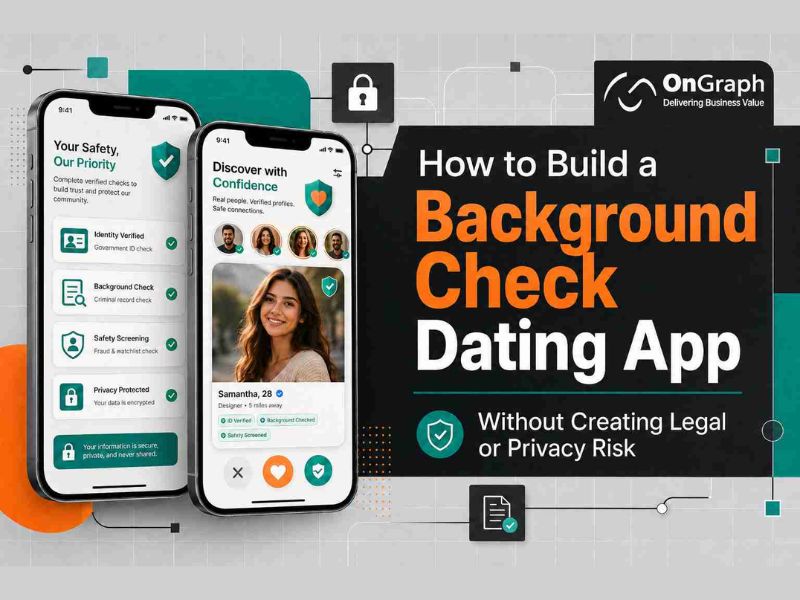
A background check dating app helps users connect with more confidence by combining ID verification, selfie/liveness checks, consent-based background screening, profile moderation, safer messaging, and admin review workflows. The goal is not to promise complete safety. The goal is to reduce fake profiles, discourage scammers, improve accountability, and create a serious dating experience where users feel more comfortable before they match, chat, or meet offline.
- A background check dating app should verify identity before running deeper screening.
- Users must clearly consent before any background check is performed.
- ID, selfie, and liveness checks help reduce fake and stolen-photo profiles.
- Background screening should be supported by moderation, reporting, and blocking tools.
- Admin review is important for flagged profiles, appeals, and sensitive decisions.
- Privacy, data retention, and compliance must be planned from the first version.
Why Founders Are Exploring Background Check Dating Apps
A background check dating app is built for people who want more than casual swiping. It is designed for users who want to meet real people, avoid fake profiles, and feel safer before building a serious connection.
This need is growing because trust has become one of the biggest problems in online dating. Many users have experienced fake accounts, romance scams, misleading photos, inappropriate behavior, or conversations that quickly move toward money requests. The emotional and financial damage can be serious.
The FTC reported that consumers lost more than $1.14 billion to romance scams in 2023, and Pew Research found that 52% of online dating users said they had encountered someone they thought was trying to scam them. These numbers show why dating platforms can no longer treat safety as a small add-on feature.
For founders, this creates a strong business opportunity. A dating app that focuses on trust, verification, and background screening can stand out from generic swipe-based apps. But it must be built carefully because background checks involve sensitive personal data, legal rules, user consent, and privacy expectations.
Launch a Safer Dating App with Trust Built In
What Is a Background Check Dating App?
A background check dating app is a dating platform that uses identity verification and screening workflows to improve user trust before people interact deeply on the platform.
It may include:
- Phone and email verification
- Government ID verification
- Selfie and liveness checks
- Face match between ID and selfie
- Criminal background screening where legally allowed
- Sex offender registry checks where available
- Watchlist screening where relevant
- Profile moderation
- Report and block tools
- Admin review workflows
- Safe communication controls
A background check dating app goes one step deeper than a normal verified dating platform. Verification confirms whether a user is real, while background screening can help add another layer of risk assessment before giving full platform access.
However, founders must understand one important point: background checks reduce risk, but they do not remove all risk. No screening system can guarantee that every user is completely safe. That is why the product should be positioned as a trust-first dating experience, not a “100% safe” platform.
Why Background Checks Matter in Serious Dating Platforms
Most dating apps are designed to increase activity. They want more signups, more swipes, more matches, and more messages. That model works for casual dating, but it does not always work for serious users.
Serious users usually want:
- Real profiles
- Clear relationship intent
- Safer conversations
- Less fake activity
- Better moderation
- More accountability
- Better confidence before meeting offline
A dating app background check flow helps create that environment. It adds healthy friction at the beginning so low-intent or suspicious users are less likely to enter the platform.
This can also support monetization. Users may be more willing to pay for a platform that gives them a safer, more serious, and more filtered dating experience. Instead of selling only access to profiles, the platform sells trust, quality, and peace of mind.
Background Checks vs ID Verification: What Is the Difference?
Many founders confuse ID verification with background screening. Both are useful, but they solve different problems.
| Layer | What It Does | Why It Matters |
| Phone/email verification | Confirms basic contact ownership | Reduces spam signups |
| ID verification | Confirms name, age, and identity document | Helps prove the user is real |
| Selfie/liveness check | Confirms the user is physically present | Reduces fake-photo and stolen-profile risk |
| Background screening | Checks selected records where legally allowed | Adds a deeper safety layer |
| Moderation | Reviews content, behavior, reports, and flags | Handles risk after onboarding |
| Admin review | Lets humans review sensitive cases | Reduces unfair automated decisions |
A strong background check dating app should not rely on one layer only. ID verification, selfie checks, background screening, moderation, and reporting should work together.
Core Features of a Background Check Dating App
1. Secure User Onboarding
The onboarding flow should collect the right amount of information without making genuine users feel overwhelmed.
A strong onboarding flow may include:
- Name
- Age
- Gender
- Location
- Relationship intent
- Phone number
- Email address
- Profile photo
- Government ID upload
- Selfie or video selfie
- Consent for verification and screening
The goal is to create accountability from day one.
2. ID Verification
ID verification helps confirm that the person joining the platform is real. Users may upload a government-issued ID such as a driver’s license, passport, or national identity card depending on the launch country.
The system can verify:
- Document authenticity
- Name match
- Age eligibility
- Expiry date
- Face match with selfie
For dating platforms, this is especially useful because fake profiles often use stolen photos, false names, and misleading information.
3. Selfie and Liveness Detection
Selfie verification asks users to take a live photo or short video. Liveness detection helps confirm that the user is physically present and not using a static image, screenshot, or deepfake-style attempt.
This feature improves trust because it connects the profile photo, ID document, and real person together.
Modern safety systems can also use AI to flag suspicious behavior, fake-profile patterns, inappropriate content, and risky chat signals. This is where AI dating app development becomes useful, especially when the platform needs both matchmaking and automated safety support.
4. Consent-Based Background Screening
A background check should never be hidden. The app should clearly explain what data will be checked, why it is needed, which third-party provider may process the data, and what the user can do if the result is unclear.
The consent screen should explain:
- What information is collected
- Why screening is required
- What type of records may be checked
- Whether a third-party vendor is involved
- How long data may be stored
- What happens if verification fails
- How users can request review or support
This is important because criminal-record and identity data can be sensitive. In Europe, GDPR Article 10 restricts how criminal conviction and offense data can be processed, which means founders need proper safeguards and legal guidance before launching in regulated markets.
5. Screening Vendor Integration
Most startups should not build criminal-record checks from scratch. A better approach is to integrate with a trusted background screening vendor through an API.
Depending on country, law, and vendor availability, the screening may include:
- Criminal record checks
- Sex offender registry checks
- Watchlist checks
- Address history checks
- Identity trace checks
- Public record checks
The app should not expose raw screening data unnecessarily. Instead, it should convert vendor responses into simple internal statuses such as verified, pending review, unable to verify, restricted, or appeal requested.
6. Profile Moderation
Even after verification, users may upload inappropriate photos, misleading content, or unsafe profile details. That is why profile moderation is important.
A good moderation system should check:
- Explicit or nude images
- Hate speech
- Scam-like profile text
- Fake celebrity photos
- Repeated duplicate images
- Suspicious links
- Incomplete profile details
For a serious dating platform, profile quality is part of user safety.
7. Safer Messaging
Messaging is where many scams and abusive behaviors begin. A background check dating app should design chat features carefully.
Useful messaging controls include:
- Chat only after mutual match
- Restricted messaging for unverified users
- Report and block buttons
- Suspicious message flagging
- Link-sharing restrictions
- Money-request risk alerts
- Admin escalation for flagged conversations
- User safety reminders before offline meetings
Apple’s App Store Review Guidelines also require user-generated-content apps to include moderation, reporting, blocking, and abuse-handling controls, so these features are important from both safety and approval perspectives.
8. Admin Review Dashboard
The admin dashboard is one of the most important parts of a background check dating app. Users see the frontend, but platform safety depends heavily on backend control.
Admins should be able to review:
- New user registrations
- ID verification status
- Background check status
- Pending approvals
- Flagged profiles
- Reported users
- Block history
- Suspicious activity
- Payment and subscription status
- Appeal requests
- Account suspension history
Without a strong admin workflow, even the best safety policy becomes hard to manage.
Build a Dating Platform Serious Users Can Trust
Recommended User Verification Workflow
A practical background check dating app should follow a step-by-step trust flow.
Step 1: Basic Signup
The user signs up using email, phone number, or social login. OTP verification confirms basic ownership.
Step 2: Profile Setup
The user adds profile details, photos, location, preferences, and relationship intent.
Step 3: ID Verification
The user uploads an ID document and takes a selfie or video selfie.
Step 4: Consent for Screening
The app explains the background screening process and collects clear consent.
Step 5: Background Check API
The platform sends required information to the screening provider.
Step 6: Risk Status
The system receives the result and assigns a status such as approved, review needed, unable to verify, or restricted.
Step 7: Admin Review
Sensitive or unclear cases go to a human admin for review.
Step 8: Access Control
The user gets access based on platform rules. For example, fully verified users may get more visibility, messaging access, or a verified badge.
Step 9: Ongoing Monitoring
The platform continues monitoring reports, blocks, suspicious chat behavior, and repeated complaints.
This workflow keeps the platform structured and scalable.
MVP Feature Plan for a Background Check Dating App
Founders do not need every advanced safety feature in version one. A phased MVP is usually the smarter path.
Phase 1: Trust-Ready MVP
Start with the core dating platform:
- User registration
- OTP verification
- Profile creation
- Match discovery
- Like and match flow
- Secure chat
- Report and block tools
- Basic admin panel
- Subscription payments
- Basic content moderation
This phase helps validate the dating concept and user demand.
Phase 2: Verification and Screening
Add stronger trust layers:
- ID verification
- Selfie verification
- Liveness detection
- Consent screen
- Background screening API
- Verification badge
- Admin review queue
- Appeal workflow
This phase makes the platform different from generic dating apps.
Phase 3: Advanced Safety and Growth
Once users are active, add:
- AI scam detection
- Inappropriate photo detection
- Video calling
- Safety center
- Advanced moderation analytics
- Geo-based pricing
- Verified-only filters
- Premium trust-based membership
- Multi-country compliance settings
If you want to launch faster, you can start with a ready-made dating app solution and customize it with ID verification, background screening APIs, admin review workflows, and privacy-safe data handling.
Background Check Dating App Monetization Models
A trust-first dating platform can support strong monetization because users are not paying only for matches. They are paying for a safer and more serious dating environment.
| Monetization Model | How It Works | Best Use |
| Monthly subscription | Users pay monthly to access verified matches | Serious dating platforms |
| Annual membership | Users pay yearly at a discounted rate | High-intent users |
| Premium verification | Users pay for enhanced verification status | Trust-based communities |
| Verified-only filters | Users pay to search verified users only | Safety-first dating apps |
| Paid messaging | Users pay to unlock chat or advanced communication | Controlled-access platforms |
| Video call unlock | Users pay for secure in-app video calls | Long-distance dating |
| Featured profile | Users pay for more visibility | Growth-stage platforms |
For serious dating platforms, a monthly subscription can also reduce low-intent activity. If users are paying for access, they are more likely to take the platform seriously.
Privacy and Legal Considerations
A background check dating app must be built with privacy from the beginning. This is not optional.
Collect Only What You Need
Do not collect unnecessary personal information. If the platform only needs an ID check result, avoid storing full ID images longer than required.
Use Clear Consent
Users should know exactly what they are agreeing to before screening begins.
Limit Sensitive Data Access
Only authorized admins should access ID, screening, or report details.
Create Data Retention Rules
Define how long ID images, selfies, screening results, and chat records will be stored.
Support User Appeals
If a user is rejected or restricted, give them a way to request a review.
Avoid Unsafe Marketing Claims
Do not say the platform is “100% safe.” A safer claim is: “We use verification, screening, and moderation to help create a more accountable dating experience.”
Consult Legal Experts
Rules around criminal records, biometric data, privacy, and consumer reporting can vary by country and state. Legal review is important before launch.
Build From Scratch or Customize a White-Label Dating App?
There are two main ways to build a background check dating app.
Custom Development
Custom development gives you full control over:
- Verification workflows
- Screening logic
- Data storage
- Admin review rules
- Compliance requirements
- Monetization model
- User experience
- Country-specific rules
This is best if safety and background screening are the core differentiators of your business.
White-Label Foundation With Custom Safety Modules
A white-label foundation can reduce cost and launch time. It gives you the base dating app features, while your development team customizes the safety layer.
This can include:
- Custom ID verification
- Background check API integration
- Consent-based onboarding
- Admin review dashboard
- Safer chat controls
- Premium verified membership
- Location-based pricing
For many founders, this hybrid model is the best option. It helps you launch faster while still building a serious trust-first dating platform.
Common Mistakes to Avoid
Mistake 1: Treating Background Checks as a Badge
A badge alone does not create safety. You need a full workflow behind it, including verification, screening, review, reporting, and enforcement.
Mistake 2: Asking for Too Much Data Too Early
Too much friction can hurt genuine signups. Start with essential checks, then add stronger screening when users reach higher-risk actions like messaging or meeting.
Mistake 3: Skipping Human Review
Automated screening can make mistakes. Sensitive decisions should include admin review and appeal options.
Mistake 4: Storing Sensitive Data Forever
Keeping ID images, selfies, and screening results longer than needed increases privacy risk. Build retention rules from the start.
Mistake 5: Making Unrealistic Safety Promises
No platform can guarantee perfect safety. Be honest about what your platform does and what users must still do to protect themselves.
Mistake 6: Ignoring App Store Safety Rules
If you plan to launch on mobile app stores, include user reporting, blocking, moderation, and clear terms of use.
Real-World Examples Founders Can Learn From
Bumble
Bumble uses multiple safety layers, including ID verification and AI-based deception detection. This shows how large dating platforms are moving toward stronger trust systems instead of relying only on profile photos.
Tinder
Tinder has expanded facial verification in some markets to fight bots and fake profiles. This shows that face verification and selfie checks are becoming more important in mainstream dating apps.
Match Group and Garbo
Match Group previously partnered with Garbo to offer background checks for Tinder users. Garbo later ended its background-check service, which shows that background screening must be planned carefully from a product, legal, cost, and user adoption perspective.
Serious Matchmaking Platforms
Many serious matchmaking businesses rely on profile review, identity checks, and manual approval. This proves that users looking for long-term relationships often accept more onboarding friction when they understand the value.
Final Planning Framework for Founders
Before building a background check dating app, answer these questions:
Product Questions
- Who is the platform for?
- Is it for serious relationships, friendship, companionship, or niche matchmaking?
- Will users need to be verified before browsing, matching, or messaging?
- What actions require full verification?
Safety Questions
- What type of verification is required?
- Will you use ID checks, selfie checks, or background screening?
- What user behavior will trigger admin review?
- What will happen after a report is submitted?
Legal and Privacy Questions
- What data will be collected?
- How will consent be captured?
- How long will sensitive data be stored?
- Which countries will you launch in first?
- What legal review is needed before launch?
Monetization Questions
- Will the platform use subscriptions?
- Will verified users pay more?
- Will there be free and paid tiers?
- Will pricing change by country?
- Will users pay for premium filters or communication tools?
Technology Questions
- Will you build a custom or customize a white-label base?
- Which verification vendor will you use?
- Which payment gateway will you integrate?
- What admin tools are needed from day one?
- How will the platform scale as users grow?
Key Takeaways
A background check dating app can become a strong business opportunity because trust is now one of the biggest problems in online dating.
The best platforms do not rely on one safety feature. They combine ID verification, selfie checks, background screening, profile moderation, safer messaging, reporting, blocking, and admin review.
Founders should start with a focused MVP, validate user demand, and then add advanced safety features in phases.
Privacy and compliance must be planned early because background checks, biometric data, ID documents, and criminal record information can create legal risk if handled poorly.
A white-label dating app foundation can help you launch faster, but the trust and screening layer should be customized around your business model.
Plan Your Dating App Before You Build
Plan your app with the right features, compliance steps, pricing model, screening workflow, and launch roadmap before development begins.
Need Help Building a Safer Dating Platform?
If you are planning to build a serious dating platform with identity verification, background screening, safer messaging, subscriptions, and admin moderation, work with a development team that understands both product experience and trust workflows.
OnGraph can help you plan, customize, and launch a dating platform that is built for real users, safer interactions, and long-term business growth.
Plan Your Dating App MVP Before Development
Before investing in full development, create a clear MVP roadmap. Decide what you will verify, what data you will collect, how users will give consent, how admins will review flagged profiles, and how the platform will generate revenue.
A clear MVP plan can help you launch faster, reduce development risk, and build a dating platform users can trust.
FAQs
A background check dating app is a dating platform that uses identity verification, selfie checks, consent-based screening, and moderation tools to create a safer dating experience. It helps confirm that users are real and can add extra safety checks before allowing full access to messaging or premium features.
For founders, this type of app is useful because trust is one of the biggest problems in online dating. When users feel safer, they are more likely to stay active, pay for subscriptions, and recommend the platform to others.
A background check dating app usually verifies users in multiple steps. It may start with phone or email verification, followed by government ID upload, selfie verification, and liveness detection. After identity is confirmed, the platform may run a background screening through a third-party provider where legally allowed.
The result can be shown as verified, pending review, unable to verify, or restricted. Sensitive cases should go to an admin review dashboard instead of being handled only by automation.
Yes, background checks can be used in dating apps, but they must be handled carefully. The platform should collect clear user consent, explain what data will be checked, work with trusted screening providers, and follow privacy laws in the launch region.
Legal rules can vary by country and state, especially for criminal-record data, biometric data, and ID documents. Founders should consult legal experts before launching background screening features.
A strong background check dating app should include user registration, OTP verification, profile creation, ID verification, selfie/liveness checks, consent-based background screening, secure chat, report and block tools, photo moderation, subscription plans, and an admin dashboard.
The admin panel is very important. It should allow platform owners to review verification status, flagged users, background check results, reports, appeals, payment activity, and suspicious behavior from one place.
The cost depends on the features, platform type, verification level, screening vendor, design complexity, and admin workflows. A basic MVP with profiles, matching, chat, subscriptions, and admin tools will cost less than a full platform with ID verification, background check APIs, AI moderation, video calls, and multi-country compliance.
The best approach is phased development. Start with core dating features and basic verification, then add background screening, advanced moderation, and premium safety features after validating demand.
Yes, a white-label dating app can support background checks if the base system is flexible enough for customization. The core dating features such as profiles, matching, chat, subscriptions, and admin tools can be launched faster, while custom modules can be added for ID verification, selfie checks, background screening APIs, and moderation workflows.
This hybrid approach helps founders reduce time and cost while still building a serious trust-first dating platform.
A background check dating app can make money through monthly subscriptions, annual memberships, premium verification, verified-only filters, paid messaging, video call unlocks, featured profiles, and advanced search options.
The strongest monetization angle is trust. Users are not just paying to view profiles. They are paying for a safer, more serious, and more accountable dating environment where fake profiles and low-intent users are harder to enter.
About the Author

Let’s Create Something Great Together!
Latest Blog

Let’s have a conversation today!


India
ONGRAPH TECHNOLOGIES PRIVATE LIMITED,
SDF L-1, NSEZ,
Sector 81, Block L, Phase-2,
Noida, Uttar Pradesh-201305

USA
OnGraph Technologies,
120 Bethpage Rd, Suite 304,
Hicksville, NY 11801, USA

Canada
7-1039 CEDARGLEN GATE,
Mississauga, Ontario,
Canada L5C 3A7

UK
89 Banstead Road South,
Sutton, Surrey, SM2 5LH
United Kingdom

Malaysia
G-3A, Amaya Maluri, Jalan
Jejaka 2, Taman Maluri,
KL–55100, Malaysia

Singapore
10 Anson Road,#26-04
International Plaza,
Singapore (079903)