


In this article
- Why the Home Services Industry Is Growing Rapidly
- What Is a Home Services App Business Model?
- How an On-Demand Home Services App Works
- Popular Home Services App Business Models
- Which Business Model Works Best?
- Why Customers Prefer On-Demand Home Services Apps
- Essential Features for a Home Services App
- Real-World Business Examples
- Technology Stack for Home Services App Development
- Step-by-Step Guide to Build a Home Services App
- Common Challenges in Home Services Apps
- Why Multi-Vendor Platforms Scale Faster
- Future Trends in Home Services Apps
- How Much Does Home Services App Development Cost?
- How to Choose the Right Development Partner
- Key Takeaways
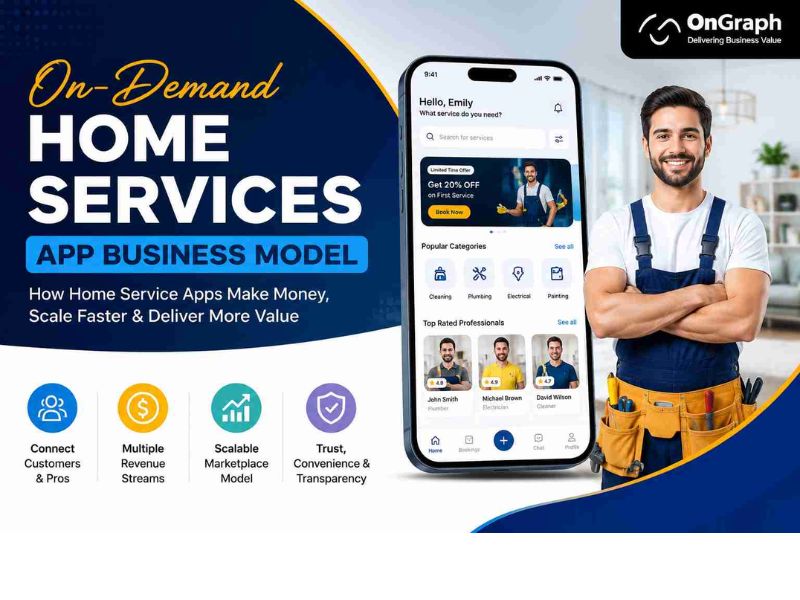
The Home Services App Business Model helps businesses connect customers with service professionals through a digital marketplace. These platforms generate revenue using commissions, subscriptions, lead fees, and featured listings.
- Multi-vendor platforms scale faster
- Commission models work best for startups
- Mobile booking improves customer retention
- Real-time tracking increases trust
- Home service demand is growing globally
- MVP-based launches reduce investment risk
Why the Home Services Industry Is Growing Rapidly
The Home Services App Business Model is growing fast across the US, UK, India, and other global markets. Customers now prefer booking services through apps instead of traditional phone calls.
People want:
- Faster bookings
- Verified professionals
- Transparent pricing
- Secure payments
- Real-time tracking
This shift created huge demand for the on demand home services app industry.
Recent industry studies show the global home services market may cross billions in value during the next decade. Strong annual growth rates also indicate long-term demand.
Another important trend is convenience-based spending. Customers are willing to pay more for faster and more reliable services.
This is why startups and enterprises are investing heavily in home services app development.
Launch Your Own Home Services App Faster
What Is a Home Services App Business Model?
A Home Services App Business Model connects customers with nearby professionals using a mobile or web platform.
The platform works as a marketplace between:
- Customers
- Service providers
- Admin operators
Common categories include:
- Plumbing
- Cleaning
- Electrical repair
- Appliance repair
- Pest control
- Painting
- Handyman services
- HVAC maintenance
The platform earns revenue from transactions, subscriptions, or service leads.
Most businesses today use the marketplace approach because it scales faster and requires lower operational management.
This model is often compared with ride-sharing platforms because both use real-time matching systems.
How an On-Demand Home Services App Works
Before investing in home services mobile app development, founders should understand the workflow.
Step 1: Customer Searches for a Service
Users open the app and select the required category.
Examples include:
- Cleaning
- Plumbing
- Electrical repair
- Handyman services
Customers can also compare:
- Pricing
- Ratings
- Availability
- Experience
Step 2: User Books a Service
The customer chooses:
- Date
- Time
- Service location
- Service package
The app then sends requests to nearby professionals.
Step 3: Provider Accepts the Request
Service professionals receive booking notifications instantly.
Providers can:
- Accept bookings
- Reject requests
- Manage schedules
- Update availability
Step 4: Real-Time Tracking Begins
Customers can track professionals in real time.
This improves:
- Trust
- Transparency
- User satisfaction
Real-time tracking also reduces cancellations.
Step 5: Service Completion and Payment
After completion:
- Customers pay digitally
- Ratings are submitted
- Providers receive payouts
This simple workflow powers most successful home service marketplace app platforms.
Popular Home Services App Business Models
Different businesses use different monetization strategies.
Choosing the right model directly impacts profitability and scalability.
1. Commission-Based Model
This is the most common handyman app business model.
The platform charges a percentage on every completed booking.
Example:
- Service fee: $100
- Platform commission: 15%
- Platform earnings: $15
Advantages:
- Easy to scale
- Predictable revenue
- Higher long-term profitability
Best For:
- Multi-vendor marketplaces
- Startup platforms
- Aggregator businesses
Most successful marketplaces use this model initially.
2. Subscription-Based Model
Service providers pay monthly or yearly subscription fees.
Example:
- Monthly membership fee
- Premium listing access
- Unlimited bookings
Advantages:
- Recurring revenue
- Stable cash flow
- Better provider loyalty
Best For:
- Established platforms
- Large service networks
3. Lead Generation Model
The platform charges providers for customer leads.
Example:
- Pay per inquiry
- Pay per booking lead
Advantages:
- Fast monetization
- Lower operational complexity
Best For:
- Local service directories
- Early-stage marketplaces
4. Featured Listing Model
Providers pay for better visibility inside the app.
Popular Add-ons:
- Sponsored listings
- Homepage banners
- Verified badges
- Priority ranking
This model works well alongside commissions.
Turn Your Home Services Idea Into a Real Business
Which Business Model Works Best?
| Business Type | Recommended Model |
| Startup marketplace | Commission model |
| Local service app | Lead generation |
| Enterprise platform | Subscription |
| Large aggregator | Hybrid monetization |
Most growing platforms combine multiple revenue streams.
Why Customers Prefer On-Demand Home Services Apps
Customer behavior has changed significantly during recent years.
People now expect:
- Instant booking
- Same-day service
- Transparent pricing
- Verified professionals
- Secure transactions
Traditional service discovery methods feel outdated.
Customers no longer want:
- Endless phone calls
- Manual price negotiations
- Unverified technicians
This shift increased demand for home services app development globally.
Essential Features for a Home Services App
Strong features improve:
- Customer retention
- Provider management
- Revenue generation
Customer App Features
Important Features
- User registration
- Service search
- Instant booking
- Scheduling calendar
- Real-time tracking
- Secure payments
- Push notifications
- Ratings and reviews
These features improve user trust and convenience.
Service Provider Features
Must-Have Tools
- Earnings dashboard
- Booking management
- Availability control
- Route navigation
- Service history
- Performance tracking
Provider-friendly systems improve platform retention.
Admin Panel Features
Critical Admin Functions
- User management
- Provider verification
- Commission management
- Analytics dashboard
- Customer support
- Dispute handling
A strong admin panel helps businesses scale efficiently.
Real-World Business Examples
Several successful businesses validated this model globally.
Example 1: Handyman Marketplace Platforms
Leading handyman apps focused heavily on:
- Trust
- Verification
- Convenience
- Real-time communication
Their success proved that customers value convenience over traditional service discovery methods.
Example 2: Premium Home Management Platforms
Some premium platforms introduced subscription-based home management services.
Instead of one-time bookings, they focused on:
- Monthly maintenance
- Long-term customer relationships
- Personalized experiences
This improved customer lifetime value significantly.
Technology Stack for Home Services App Development
Choosing the right technology is important for scalability.
Recommended Technology Stack
| Component | Recommended Technology |
| Mobile App | Flutter |
| Backend | Laravel / Node.js |
| Database | MySQL / PostgreSQL |
| Hosting | AWS |
| Payments | Stripe / PayPal |
| Maps | Google Maps API |
Modern home services app development solutions usually focus on scalability and faster deployment.
Step-by-Step Guide to Build a Home Services App
Many startups fail because they skip planning.
This framework reduces risk and improves launch success.
Step 1: Choose a Specific Niche
Start with one category first.
Examples:
- Cleaning services
- Plumbing services
- HVAC repair
- Electrical services
Avoid launching too many categories initially.
Focused platforms grow faster.
Step 2: Validate Market Demand
Research:
- Local competitors
- Customer pain points
- Pricing gaps
- Service quality issues
This helps avoid unnecessary development costs.
Step 3: Finalize the Business Model
Decide your monetization strategy early.
Choose:
- Commission
- Subscription
- Lead generation
- Hybrid model
Your revenue structure affects the entire platform.
Step 4: Build an MVP
Start with the minimum essential features only.
This reduces:
- Development cost
- Launch delays
- Operational risk
An MVP also helps gather real customer feedback.
Step 5: Onboard Service Providers
Provider quality directly impacts customer retention.
Focus on:
- Verification
- Training
- Background checks
- Ratings management
Poor provider quality damages trust quickly.
Step 6: Launch in One City First
Many startups scale too early.
Start with one region and optimize operations first.
This improves:
- Service quality
- Customer satisfaction
- Unit economics
Common Challenges in Home Services Apps
Every marketplace faces operational problems.
Understanding these challenges early improves success rates.
1. Provider Quality Problems
Poor service quality reduces repeat bookings.
Solution:
- Ratings system
- Verification process
- Performance monitoring
2. Customer Retention Issues
Many users book only once.
Solution:
- Loyalty programs
- Subscription packages
- Personalized offers
Retention matters more than downloads.
3. Scheduling Failures
Late arrivals reduce customer trust.
Solution:
- Real-time tracking
- Smart scheduling
- Automated reminders
4. High Customer Acquisition Costs
Paid advertising can become expensive quickly.
Solution:
- Referral programs
- Local SEO
- Partnerships
- Organic content marketing
Why Multi-Vendor Platforms Scale Faster
Single-provider businesses grow slowly.
Multi-vendor marketplaces scale faster because:
- More providers improve availability
- More categories increase retention
- Revenue grows automatically with transactions
This is why most businesses prefer the marketplace model today.
Future Trends in Home Services Apps
The industry continues evolving rapidly.
Several important trends are shaping the future.
1. Subscription-Based Maintenance
Customers now prefer monthly maintenance plans.
This creates predictable recurring revenue.
2. Smart Scheduling Systems
Advanced scheduling reduces cancellations and delays.
This improves operational efficiency.
3. Real-Time Provider Matching
Faster matching improves:
- Conversion rates
- Customer satisfaction
- Booking completion
4. Cross-Platform Experiences
Customers expect seamless mobile and web experiences.
Modern businesses now prioritize:
- Mobile apps
- Web dashboards
- Unified booking systems
How Much Does Home Services App Development Cost?
Development cost depends on:
- Features
- Platform complexity
- Team size
- Technology stack
Estimated Cost Breakdown
| App Type | Estimated Cost |
| MVP App | $15,000–$30,000 |
| Mid-Level Marketplace | $30,000–$70,000 |
| Enterprise Platform | $70,000+ |
Many startups now choose ready-made frameworks to reduce cost and launch faster.
If you want to build a scalable platform quickly, you can explore professional Home Services App Development Solutions.
How to Choose the Right Development Partner
Your development partner directly impacts:
- Product quality
- Scalability
- Security
- Time to market
Important Things to Check
- Marketplace experience
- UI/UX capabilities
- Scalable architecture
- Post-launch support
- Cloud deployment expertise
Experienced teams reduce development risk significantly.
If you are planning a scalable on-demand home services app, working with experienced developers can improve both speed and quality.
You can also explore scalable Home Services App Development Services for faster deployment.
Key Takeaways
- The Home Services App Business Model continues growing globally
- Marketplace-based platforms scale faster
- Commission models work best for startups
- Customer trust drives long-term success
- MVP-based launches reduce investment risk
- Strong provider management improves retention
- Real-time tracking increases customer satisfaction
Start Your Handyman App Business With Experts
Launch a feature-rich home services app designed for cleaning, plumbing, repairs, HVAC, and local service businesses.
Final Thoughts
The demand for digital home services continues to increase across global markets.
Customers now expect:
- Fast booking
- Verified professionals
- Transparent pricing
- Secure payments
This creates strong opportunities for startups, agencies, and enterprises building scalable platforms.
However, long-term success depends on:
- Choosing the right business model
- Building strong provider networks
- Maintaining service quality
- Improving customer retention
The businesses winning this market focus heavily on customer experience and operational efficiency.
If you are planning to launch a scalable home service marketplace app, starting with the right strategy and development partner can reduce both cost and risk significantly.
FAQs
A Home Services App Business Model connects customers with nearby service professionals through a digital platform. These apps usually offer services like plumbing, cleaning, electrical repair, and handyman solutions. Businesses earn revenue through commissions, subscriptions, lead generation, or featured listings. Most modern platforms follow a marketplace model because it scales faster and supports multiple service providers.
Home services apps generate revenue using different monetization methods. The most common method is charging a commission on every completed booking. Some platforms also earn through monthly subscriptions, provider listing fees, premium promotions, and paid customer leads. Many successful businesses combine multiple revenue streams to increase profitability and long-term growth.
The cost depends on features, complexity, platforms, and development requirements. A basic MVP app may cost between $15,000 and $30,000. Mid-level marketplace platforms usually cost between $30,000 and $70,000. Enterprise-level applications with advanced features and scalability may exceed $70,000. Using ready-made solutions can reduce both development time and overall investment.
A successful on-demand home services app should include user registration, service booking, real-time tracking, secure payments, ratings, push notifications, and provider management. Admin dashboards, analytics, and commission controls are also important. These features improve customer experience, provider management, and operational efficiency.
Multi-vendor platforms scale faster because they support multiple service providers and categories. More providers increase service availability and customer retention. Businesses can also expand into new regions without hiring in-house staff. This model creates recurring revenue opportunities and improves long-term scalability.
Development timelines depend on project complexity and feature requirements. A simple MVP may take around 2–4 months. Mid-level marketplace platforms usually require 4–8 months. Enterprise solutions with advanced workflows and integrations may take longer. Ready-made frameworks can significantly reduce launch timelines.
Yes, the industry continues growing rapidly across global markets. Customers increasingly prefer app-based booking experiences because they are faster and more convenient. Rising demand for digital convenience, verified professionals, and real-time services makes this business model highly attractive for startups and enterprises in 2026 and beyond.
About the Author

Let’s Create Something Great Together!
Latest Blog

Let’s have a conversation today!


India
ONGRAPH TECHNOLOGIES PRIVATE LIMITED,
SDF L-1, NSEZ,
Sector 81, Block L, Phase-2,
Noida, Uttar Pradesh-201305

USA
OnGraph Technologies,
120 Bethpage Rd, Suite 304,
Hicksville, NY 11801, USA

Canada
7-1039 CEDARGLEN GATE,
Mississauga, Ontario,
Canada L5C 3A7

UK
89 Banstead Road South,
Sutton, Surrey, SM2 5LH
United Kingdom

Malaysia
G-3A, Amaya Maluri, Jalan
Jejaka 2, Taman Maluri,
KL–55100, Malaysia

Singapore
10 Anson Road,#26-04
International Plaza,
Singapore (079903)