


In this article
- The New Era of Intelligent Matchmaking
- What Is AI Dating App Development?
- Why AI Is Transforming the Online Dating Industry?
- Emerging AI Dating App Development Trends in 2025
- Must-Have AI Features for a Modern Dating App
- Technology Stack for AI Dating App Development
- Ethics, Transparency & Trust in AI Dating Apps
- How AI Improves Safety & Moderation?
- Cost of AI Dating App Development
- Monetization Opportunities
- Case Study: How AI Increased User Trust?
- Future of AI Dating App Development
- Conclusion
The New Era of Intelligent Matchmaking
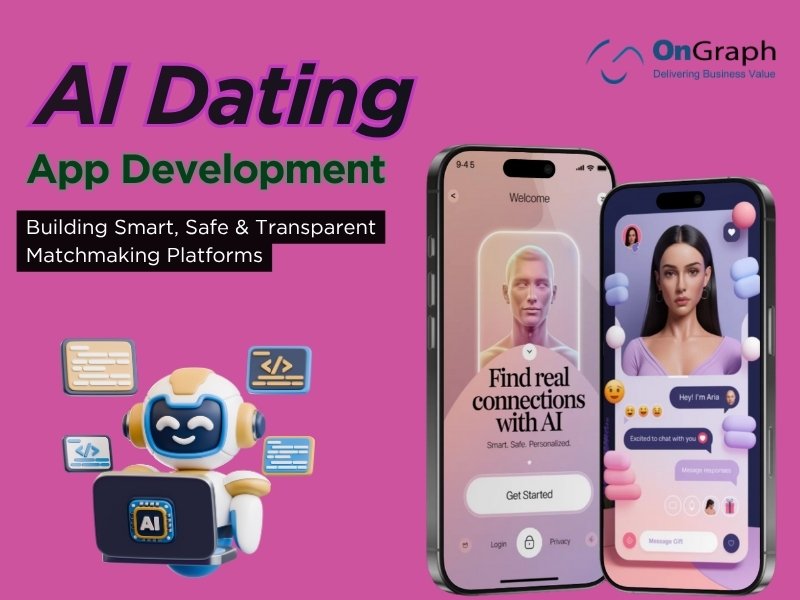
AI Dating App Development is reshaping how people connect, match, and build meaningful relationships. In 2025, users expect personalized matches, real-time safety checks, and effortless engagement—all powered by artificial intelligence.
Modern AI-powered dating apps use advanced algorithms, behavioral analytics, and machine learning to match users with remarkable precision. From personalized recommendations to instant chat responses, AI is transforming what once felt like luck into a science of compatibility.
According to Statista, the global online dating market is projected to reach $11.3 billion by 2028, with AI-driven matchmaking apps growing 40% faster than traditional ones. Apps such as Tinder, Bumble, and Hinge are already integrating AI moderation, smart prompts, and verification features to enhance both trust and engagement.
Let’s explore how AI Dating App Development is evolving—its core technologies, market trends, safety standards, and how brands can create ethical, transparent, and profitable platforms.
What Is AI Dating App Development?
AI Dating App Development is the process of building dating platforms that integrate artificial intelligence, machine learning, and data-driven personalization to improve matchmaking accuracy, automate moderation, and enhance user experience.
Unlike traditional dating apps that rely only on swipes or filters, AI-powered systems learn from user behavior—likes, chat responses, conversation tone, and even dwell time on profiles—to create smarter, more compatible matches.
Core Components of AI Dating App Development
1- AI-based Matchmaking Algorithms – Machine learning analyzes thousands of interactions to predict compatibility.
2- Natural Language Processing (NLP) – Helps the app understand bio descriptions, detect toxic messages, and recommend better responses.
3- Computer Vision Models – Used for photo moderation, face verification, and emotion detection.
4- Conversational AI – Provides personalized icebreakers or suggests replies during conversations.
5- Behavioral Analytics – Tracks activity to detect fake profiles or suspicious patterns.
A modern AI matchmaking app development strategy blends these components to create a safer, smarter, and more inclusive experience for users.
Why AI Is Transforming the Online Dating Industry
Online dating has matured from simple swiping to deep compatibility matching. Users now want apps that understand them—not just present random options.
Key Benefits of AI Dating Apps
- Higher Match Accuracy: AI identifies real preferences based on micro-behaviors, not just form answers.
- Improved Retention: Smart recommendations and dynamic chat aids keep users engaged longer.
- Reduced Fake Accounts: Machine learning filters detect bots, scams, and catfishing attempts.
- Enhanced Safety: Real-time monitoring and photo verification add credibility.
- Personalized Experiences: AI tailors matches and conversations to each user’s personality.
Case Study: After integrating AI-based recommendation systems, a European dating platform increased its match-to-conversation rate by 37% and reduced fake accounts by 52% within six months.
Emerging AI Dating App Development Trends in 2025
As technology and consumer expectations evolve, AI Dating App Development Trends are redefining how people connect. Several emerging trends are shaping the next generation of artificial intelligence dating platforms.
a) Emotion Recognition & Sentiment Analysis
AI can now detect emotions in text or voice chats to sense tone and mood. If a conversation feels negative, the system may suggest calming phrases or safety warnings.
b) Voice-First Dating Experiences
With the rise of audio-based social platforms, AI voice recognition helps match people based on tone and communication style rather than appearance.
c) AI-Generated Avatars & Digital Companions
Some startups are building AI dating app finders that offer “digital twin” experiences where users can create an avatar to learn social confidence before real conversations.
d) Adaptive Safety Systems
Smart dating apps now include automatic emergency check-ins, AI-driven risk alerts, and contextual reporting to keep users safe during offline meet-ups.
e) Niche AI Apps (Micro-Communities)
The market is growing for specialized products—Passion-Based Dating Apps with AI, cultural apps, and Language-Learning Based Dating Apps that pair users by interest or skill-sharing goals.
Must-Have AI Features for a Modern Dating App
1. Smart Matchmaking Engine
A combination of ML algorithms, collaborative filtering, and behavioral analytics generates compatibility scores and ranks users.
2. AI-Generated Icebreakers & Prompts
ChatGPT-style AI assists users with creative introductions, helping overcome “first message anxiety.”
3. Real-Time Moderation System
AI detects hate speech, inappropriate photos, or scams within seconds, reducing manual intervention.
4. Photo & Face Verification
Computer Vision verifies profile authenticity and eliminates duplicates or stolen images.
5. Behavioral Risk Detection
AI flags suspicious users who send repetitive or harassing messages.
6. Smart Suggestions for Profile Optimization
An AI assistant recommends photo improvements, bio tone adjustments, or hobbies that improve visibility.
7. Dynamic Pricing & Monetization Models
ML can personalize pricing tiers or recommend in-app purchases based on user engagement patterns.
Technology Stack for AI Dating App Development
A high-performing AI-powered dating app requires an advanced yet flexible tech foundation.
| Layer | Technologies | Purpose |
| Frontend | Flutter, React Native | Cross-platform app development |
| Backend | Node.js, Python (Django/Flask) | Server-side logic, data APIs |
| Database | PostgreSQL, MongoDB | User data storage |
| AI & ML Stack | TensorFlow, PyTorch, OpenAI API, Scikit-Learn | AI model development |
| NLP Tools | spaCy, GPT API | Chat moderation & conversation AI |
| Computer Vision | AWS Rekognition, Google Vision AI | Photo verification & content filtering |
| Cloud Hosting | AWS, Google Cloud, Azure | Scalability & security |
| Analytics | Mixpanel, Firebase Analytics | Engagement tracking |
For clients looking to build a Dating App Like Tinder, integrating this stack with AI APIs ensures faster development and scalability while keeping privacy intact.
Ethics, Transparency & Trust in AI Dating Apps
AI can be powerful but also risky if misused. Responsible smart dating app development must prioritize transparency, consent, and fairness.
Key Principles to Follow
- Transparency: Let users know when AI assists in chats or suggestions.
- Consent: Obtain explicit permission before processing personal data.
- Bias Mitigation: Continuously test models to avoid discrimination by gender, ethnicity, or region.
- Explainability: Give users insight into why certain matches are shown.
- Privacy-by-Design: Encrypt sensitive data and comply with GDPR/CCPA standards.
Example: A top-tier dating platform saw a 60% trust improvement after displaying “AI-generated match suggestions” labels transparently.
How AI Improves Safety & Moderation?
Security and trust are top concerns for dating app users. Integrating AI moderates user behavior in real time.
- Automated Content Scanning: Flags explicit images and toxic language.
- Behavioral Monitoring: Detects repetitive spam or fraudulent intent.
- Contextual Alerts: Send check-in notifications if users meet offline.
- Face Verification: Prevents fake or duplicate accounts.
By applying predictive analytics, apps can proactively prevent unsafe interactions before they escalate.
Cost of AI Dating App Development
The cost to develop an AI dating app depends on the scope, features, and location of the Dating App Development Company.
| App Type | Estimated Cost Range (USD) | Development Time |
| MVP with basic AI features | $30,000 – $60,000 | 3–4 months |
| Full-scale AI matchmaking platform | $80,000 – $150,000+ | 6–9 months |
| Enterprise-level app with advanced AI | $200,000+ | 9–12 months |
Maintenance, AI model updates, and data-storage costs typically add another 15–20% per year.
Launch a Smart, Safe, and Scalable AI Dating Platform — Talk to Our Experts Now!
Monetization Opportunities
AI unlocks new revenue streams beyond subscriptions.
- Personalized Premium Plans – Tiered access to advanced AI features such as smart chat prompts.
- Pay-Per-Event Models – Ticketed speed-dating or live AI-moderated sessions.
- Affiliate Partnerships – In-app restaurant or coffee suggestions during real-world dates.
- Profile Boosts via AI Scores – Paid features to enhance visibility based on activity quality.
These monetization experiments help recover development costs and sustain long-term profitability.
Case Study: How AI Increased User Trust
A mid-sized dating platform in Asia integrated an AI moderation engine that automatically filtered explicit photos and spam. Within three months:
- Fake profiles dropped by 46%
- User complaint rate decreased by 38%
- Daily active users rose by 27%
By pairing automated tools with human oversight, the app maintained both safety and authenticity—a key success factor for AI dating app development.
Future of AI Dating App Development
The future lies in contextual dating, where the app not only matches profiles but also understands why two users might click.
Trends to watch in the next five years:
- Integration of metaverse experiences (virtual date spaces)
- AI wearables analyzing real-world chemistry signals
- Emotion-based compatibility scores
- Cross-language AI translation for global dating
AI will continue bridging cultural, linguistic, and emotional gaps in modern relationships.
Conclusion
AI has turned dating apps from random swipe machines into intelligent matchmaking ecosystems. Yet, technology alone isn’t enough. Success in AI Dating App Development comes from blending data science, design ethics, and user trust.
If you aim to build a dating app like Tinder or launch a niche AI dating app, focus on responsible AI use, cultural localization, and privacy. The next generation of dating apps won’t just match people—they’ll understand them.
FAQs
The biggest advantage lies in data-driven personalization. Traditional apps rely on manual filters and random swipes, while AI apps learn from every interaction—your likes, pauses, or rejections. Machine learning models continuously refine your preferences, providing more accurate matches. Additionally, AI moderation ensures a safer environment by automatically filtering harassment or fake profiles. The result is a smoother, more engaging, and trustworthy dating experience.
AI combines collaborative filtering, neural networks, and natural language processing to analyze multiple data sources—user behavior, demographic data, chat tone, and social cues. The system identifies subtle patterns, such as shared humor or activity timing, and uses them to predict compatibility scores. This process is similar to how Netflix recommends shows—but focused on human relationships. The more users interact, the smarter the matchmaking becomes, creating a virtuous feedback loop.
Building AI dating apps poses several challenges:
- Data Privacy & Consent: Collecting user data ethically while complying with laws like GDPR and CCPA.
- Bias in Algorithms: Avoiding discrimination in AI training data to ensure fairness.
- Model Maintenance: AI requires constant retraining to stay relevant as user behavior evolves.
- Transparency: Clearly showing when AI assists conversations or matches.
- Cost: AI infrastructure, especially LLMs and vision models, can raise costs by 30–50%.
A professional Dating App Development Company mitigates these risks through model audits, user consent flows, and cloud cost optimization.
Transparency builds trust. Here are key practices:
- Disclose AI Use: Label AI-generated matches or responses with badges like “AI-suggested.”
- User Control: Allow users to toggle AI features on or off.
- Explainability: Show why a match was recommended (e.g., shared interests, activity times).
- Feedback Loops: Let users rate AI recommendations for continuous learning.
- Privacy Notices: Make data collection and retention policies clear in settings.
Apps following these guidelines report higher satisfaction and retention rates.
The cost of AI Dating App Development depends on feature complexity, technology stack, and location of developers.
- A basic MVP with AI recommendations may cost $30k–$60k.
- A full AI matchmaking system with moderation and facial verification may reach $120k+.
- For enterprise features such as live emotion detection or multilingual chatbots, budgets can exceed $200k.
Ongoing expenses include hosting, AI model training, and third-party API costs.
AI enhances safety through proactive monitoring:
- Image Recognition: Filters explicit or fake photos.
- Chat Analysis: Detects harassment or scam language instantly.
- User Behavior Scoring: Identifies high-risk users based on patterns.
- Emergency Check-Ins: Sends location alerts to trusted contacts if users fail to check in after a meeting.
By combining these tools with human review, developers can create a secure, trust-centered experience without manual moderation overload.
Absolutely. Future AI matchmaking app development trends include:
- AR Filters for immersive video calls or profile photos.
- IoT Beacons for proximity-based matchmaking at events or venues.
- VR Metaverse Integration for virtual date experiences.
AI serves as the brain that coordinates these technologies—analyzing location, mood, and activity data to suggest real-world or digital interactions. Combining these technologies can create an entirely new class of interactive social apps.
About the Author

Let’s Create Something Great Together!
Latest Blog
Let’s have a conversation today!


India
ONGRAPH TECHNOLOGIES PRIVATE LIMITED,
SDF L-1, NSEZ,
Sector 81, Block L, Phase-2,
Noida, Uttar Pradesh-201305

USA
OnGraph Technologies,
120 Bethpage Rd, Suite 304,
Hicksville, NY 11801, USA

Canada
7-1039 CEDARGLEN GATE,
Mississauga, Ontario,
Canada L5C 3A7

UK
89 Banstead Road South,
Sutton, Surrey, SM2 5LH
United Kingdom

Malaysia
G-3A, Amaya Maluri, Jalan
Jejaka 2, Taman Maluri,
KL–55100, Malaysia

Singapore
10 Anson Road,#26-04
International Plaza,
Singapore (079903)