


In this article
- Why OTT Aggregation Platforms Are Becoming a Strong Growth Model
- The Real Founder Problem Is Not Just Launching, but Launching Without Rebuilding Later
- What Is an OTT Aggregation Platform?
- When an OTT Aggregation Platform Makes More Sense Than a Basic OTT App
- Core Features You Should Prioritize First
- The Right Architecture for a Scalable OTT Aggregation Platform
- MVP vs Full-Scale Platform: What Should You Actually Launch First?
- A Practical Step-by-Step Framework
- Common Mistakes to Avoid
- Example Use Cases Where Aggregation Works Especially Well
- What Founders and Media Businesses Should Evaluate Before Development
- Why This Model Has Strong Commercial Potential
- Key Takeaways
- Need Help Planning the Right OTT Build?
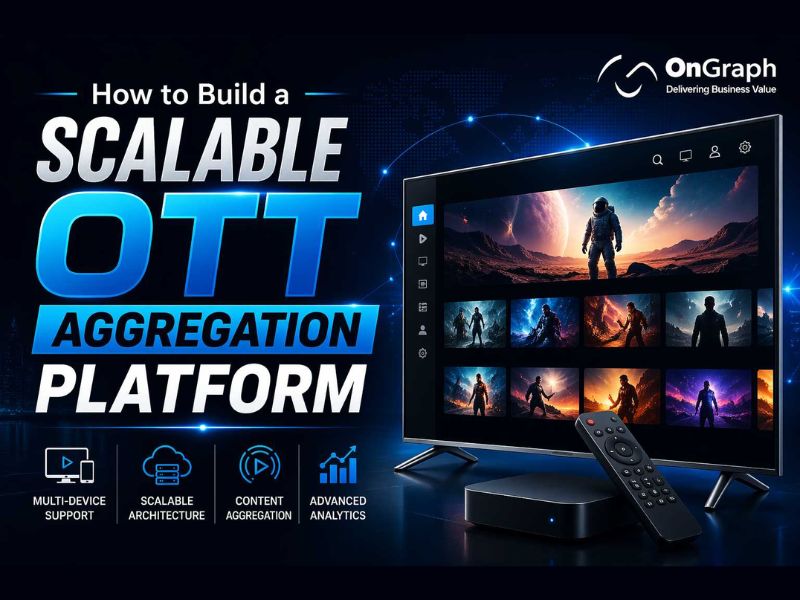
An OTT aggregation platform helps you combine your own video or audio content with external channels and deliver everything through one branded experience across mobile, web, and connected devices. The best way to launch is to start with a scalable MVP, validate audience demand, and then expand your platform with more devices, channels, and monetization layers without rebuilding the entire product.
- Start with a mobile-first OTT MVP
- Build for future scaling from day one
- Add external channel aggregation in phases
- Support subscriptions, analytics, and content control
- Expand later to web, TV, and smart devices
Why OTT Aggregation Platforms Are Becoming a Strong Growth Model
The streaming market is no longer only about launching one more content app. Today, many founders and media businesses want to control distribution, own the customer relationship, and offer a broader viewing experience through one branded ecosystem.
That is where an OTT aggregation platform becomes more valuable than a basic streaming app. Instead of offering only one library of content, you can combine your own shows, music, live channels, niche content catalogs, and selected external feeds inside one platform.
For businesses evaluating a ready product path, it also helps to understand the advantages of a white-label streaming platform before committing to a custom roadmap.
Build a Future-Ready OTT Platform That Scales With You
The Real Founder Problem Is Not Just Launching, but Launching Without Rebuilding Later
Many businesses want to enter streaming fast, but they often face two major problems.
1. They try to build too much too early
They want mobile apps, web apps, smart TV apps, subscription billing, advanced recommendations, analytics, and channel aggregation from day one. That usually increases cost, slows launch, and makes validation harder.
If your goal is early market entry, studying how to launch your own OTT app can help frame the right first-release scope.
2. They launch quickly on weak architecture
Some teams move fast, but the codebase is not designed for future scale. When users grow, performance drops, content operations become harder, and the company ends up rebuilding core systems.
That is why the better strategy is simple: launch a controlled MVP, but build it on a backend and admin structure that can scale later.
What Is an OTT Aggregation Platform?
An OTT aggregation platform is a streaming product that allows users to access multiple types of content inside one unified interface. This can include:
- Your original video content
- Music or audio content
- Live or curated channels
- Third-party content feeds
- On-demand libraries
- Multi-device streaming access
In practical terms, it gives users one destination for discovery, watching, subscriptions, and engagement while giving your business full branding and operational control.
If you are still comparing broad streaming product models, it is useful to review the fundamentals of OTT app development before deciding whether aggregation should be part of your phase-one roadmap.
When an OTT Aggregation Platform Makes More Sense Than a Basic OTT App
A standard OTT app works well when you only need to publish your own content library. But an aggregation platform becomes more attractive when:
- You aim to combine owned content with third-party sources
- Your strategy includes creating channel-style viewing experiences
- A diverse content library helps improve perceived value at launch
- Expansion across multiple countries or audience segments is part of your roadmap
- Building a long-term media ecosystem remains a key objective
This is especially relevant for broadcasters, niche media brands, telecom-backed services, regional content businesses, faith-based networks, music-video platforms, and digital-first content aggregators.
Core Features You Should Prioritize First
A scalable product does not mean shipping every feature on day one. It means choosing the right foundation.
Dynamic content management
Your admin panel should allow you to:
- Upload movies, episodes, music, clips, and trailers
- Create genres, tags, banners, and collections
- Highlight selected titles in hero sections
- Configure home widgets dynamically
- Control release visibility and featured placement
For businesses that want a faster launch path, a readymade OTT app solution can reduce time-to-market while still giving flexibility for later upgrades.
Subscription and payment management
Your platform should support:
- Monthly and yearly plans
- Promo offers or trial access
- Web payment integration
- In-app purchase compliance for mobile apps
- Subscription history and plan controls from admin
User onboarding and profile controls
Keep onboarding friction low with:
- Mobile OTP login
- Email login
- Social sign-in
- Parental control options
- Profile-level content controls where required
Streaming performance
A streaming product must feel instant. Users expect smooth playback, quick loading, and clean transitions. This becomes even more important if you plan to support short-form or swipe-based content discovery.
If short-form engagement is part of your future model, you can also study building a TikTok-style short drama app to understand how vertical playback behavior changes product decisions.
Analytics and usage tracking
You should know:
- Identify which content gets the highest watch time
- Analyze where users drop off during playback
- Track which titles contribute most to retention
- How long sessions last
- What devices users prefer
- Which subscription plans convert better
Without analytics, scaling decisions become guesswork.
Ready to Launch Your OTT Aggregation Platform?
The Right Architecture for a Scalable OTT Aggregation Platform
A good OTT product is not only about a polished interface. It needs a structure that supports future growth.
Frontend layer
This includes:
- Mobile apps
- Web platform
- Tablet optimization
- Future connected TV or streaming stick interfaces
Backend layer
This powers:
- Authentication
- Content delivery logic
- User management
- Billing flows
- Admin controls
- Search, recommendations, and tracking
Streaming infrastructure
This includes:
- Video encoding
- Storage architecture
- CDN delivery
- Adaptive bitrate playback
- Buffer optimization
Admin and operations layer
This covers:
- Content publishing
- Widget management
- Banner setup
- Genre and taxonomy management
- Purchase plan controls
- Support and user management
Businesses comparing delivery models should also understand the real implementation path behind white-label OTT app development steps before finalizing whether they need a ready base, custom build, or hybrid route.
MVP vs Full-Scale Platform: What Should You Actually Launch First?
One of the biggest mistakes in streaming product planning is confusing long-term vision with version-one scope.
| Area | MVP Launch | Full Platform |
| Mobile app | Yes | Yes |
| Web app | Optional | Yes |
| External channels | Limited | Advanced |
| Subscription billing | Yes | Yes |
| Smart TV apps | No | Later |
| Advanced recommendation engine | No | Later |
| Regional expansion support | Limited | Yes |
| Analytics | Basic | Advanced |
| Device ecosystem | Focused | Multi-layered |
The smarter approach is not to shrink ambition. It is to sequence it properly.
A Practical Step-by-Step Framework
1. Define the first content model
Start by answering:
- Decide whether to launch with only original content
- Evaluate adding music, clips, or live channels
- Consider aggregating selected external streams
- Define whether your initial audience is local, regional, or global
Your content model affects platform structure, compliance needs, and user expectations.
2. Launch the first version on mobile
For many OTT businesses, mobile is the fastest channel for market testing. It gives you:
- Faster release cycles
- Easier feedback collection
- Better control over MVP scope
- Stronger adoption in mobile-first regions
3. Build a scalable admin panel early
A weak content backend slows growth. Even if your first release is small, your team should be able to manage:
- Content uploads
- Sections and widgets
- Categories
- Plans
- Banners
- Featured content logic
4. Add external channel aggregation carefully
Aggregation can increase viewer value quickly, but it should be operationally structured. Decide:
- Which channel types to include
- What rights or integrations are required
- How those channels appear inside discovery flows
- Whether users view them as part of a bundle or separate offering
5. Use analytics to guide expansion
Do not add features just because competitors have them. Add them when usage signals justify them.
6. Expand to web and larger screens only after usage validation
Once content consumption patterns are validated, then you can expand to:
- Desktop and web viewing
- Tablet support
- Smart TV experiences
- Device-specific optimization
For region-focused launches, it can also help to review how to launch a micro drama platform in Europe as an example of why audience, geography, and device behavior can change rollout priorities.
Business Benefits of Starting with a Scalable MVP
A proper MVP strategy gives you:
Faster time to market
You go live earlier and start learning from real users.
Lower risk
You avoid overspending before validating demand.
Better product clarity
You understand what users actually watch and pay for.
Easier fundraising or stakeholder buy-in
Real usage data is stronger than assumptions.
Stronger future expansion
You add layers on top of a stable base instead of rebuilding.
Common Mistakes to Avoid
Building for every device at once
This increases complexity early without guaranteed return.
Ignoring admin flexibility
A content-heavy platform becomes difficult to manage without dynamic controls.
Treating content and infrastructure separately
Content strategy, user experience, and streaming performance must be planned together.
Underestimating subscription and app store rules
Payment logic differs between web and native apps. This affects product design early.
Using a non-scalable codebase
The cost of rebuilding later is much higher than making the right architecture decisions first.
Example Use Cases Where Aggregation Works Especially Well
An OTT aggregation platform can work well for:
- Regional streaming networks
- Niche entertainment brands
- Music plus video ecosystems
- Faith-based media platforms
- Broadcasters expanding to mobile
- Multi-country content distribution businesses
- Hybrid content plus telecom service models
These models usually need more than a simple content app. They need a platform that can evolve into a broader digital distribution layer.
What Founders and Media Businesses Should Evaluate Before Development
Before starting development, align on these questions:
- What content will be available at launch?
- What must be manually managed by admin?
- Which platforms matter in phase one?
- What subscription model will be used?
- Will external channels be part of version one or version two?
- How will user behavior be measured?
- What does success look like in the first six months?
These answers define product scope more clearly than feature wishlists do.
Why This Model Has Strong Commercial Potential
An OTT aggregation platform is commercially attractive because it gives your business multiple growth levers:
- Subscription revenue
- Premium bundles
- Channel-based packaging
- Cross-promotion of owned content
- Multi-market expansion
- Better customer retention through content variety
Instead of depending on one narrow content offering, you build a system that can grow in layers.
Don’t Just Launch—Scale Your OTT Platform From Day One
We help you build OTT platforms that handle growth, content expansion, and high traffic without performance issues.
Key Takeaways
- An OTT aggregation platform is a smart choice when you want to combine owned content with broader viewing options.
- The best path is to launch with a controlled MVP and scale on a strong technical foundation.
- Mobile-first launch usually makes market testing faster and more affordable.
- Dynamic content operations, subscriptions, analytics, and scalable architecture matter from the beginning.
- Businesses planning multi-device or multi-region growth should avoid building a disposable first version.
Need Help Planning the Right OTT Build?
If you are evaluating whether to launch with a custom build, a white-label base, or a hybrid OTT model, the right decision depends on your content plan, expansion timeline, and monetization goals.
Our team helps businesses plan, customize, and scale OTT products with a focus on launch speed, admin flexibility, and long-term growth.
If you are at the early planning stage, we can also help you define the MVP scope, platform architecture, and rollout roadmap before development begins.
FAQs
An OTT aggregation platform is a streaming system that combines multiple content sources—such as your own videos, third-party channels, live streams, and on-demand libraries—into a single app or interface. Instead of users switching between multiple apps, they can access everything in one place. This improves user experience and increases engagement, making it a strong business model for media companies and startups.
To build a scalable OTT aggregation platform, start with a mobile-first MVP and focus on core features like content management, streaming, and subscriptions. Use a flexible backend architecture that allows future scaling without rebuilding. Add external channel integration, analytics, and multi-device support in later phases. Scalability depends on both code structure and infrastructure optimization.
Key features include:
- Dynamic content management system
- Multi-device streaming (mobile, web, TV)
- Subscription and payment integration
- External channel aggregation
- User analytics and tracking
- Personalized recommendations
- High-performance video streaming (low buffering)
These features ensure both user experience and business scalability.
The cost depends on features, scalability, and customization level. A basic MVP can range from $5,000 to $15,000 using ready or white-label solutions, while a fully custom scalable OTT aggregation platform can cost $30,000+ depending on integrations, infrastructure, and device support. Starting with an MVP helps reduce initial investment and risk.
A regular OTT app focuses on hosting and streaming its own content, while an OTT aggregation platform combines multiple content sources, including third-party channels. Aggregation provides more variety to users and creates additional monetization opportunities like bundled subscriptions and partner content distribution.
Yes, a well-built OTT aggregation platform can support:
- Mobile apps (Android & iOS)
- Web platforms
- Smart TVs
- Tablets
- Streaming devices (like sticks and set-top boxes)
However, it is recommended to start with mobile and expand to other devices after validating user demand.
Scalability is managed through:
- Cloud-based infrastructure (AWS, etc.)
- Content Delivery Networks (CDNs) to reduce buffering
- Load balancing across servers
- Efficient video encoding and streaming protocols
- Scalable backend APIs
A properly designed system ensures smooth performance even as user traffic grows significantly.
About the Author

Let’s Create Something Great Together!
Latest Blog
Let’s have a conversation today!


India
ONGRAPH TECHNOLOGIES PRIVATE LIMITED,
SDF L-1, NSEZ,
Sector 81, Block L, Phase-2,
Noida, Uttar Pradesh-201305

USA
OnGraph Technologies,
120 Bethpage Rd, Suite 304,
Hicksville, NY 11801, USA

Canada
7-1039 CEDARGLEN GATE,
Mississauga, Ontario,
Canada L5C 3A7

UK
89 Banstead Road South,
Sutton, Surrey, SM2 5LH
United Kingdom

Malaysia
G-3A, Amaya Maluri, Jalan
Jejaka 2, Taman Maluri,
KL–55100, Malaysia

Singapore
10 Anson Road,#26-04
International Plaza,
Singapore (079903)