


In this article
- Why Gyms Need a Smarter Way to Handle Fitness Leads
- What Is an AI Voice Agent?
- Why Fitness Leads Are Easy to Lose
- How an AI Receptionist for Gyms Helps Convert More Leads
- Main Use Cases of an AI Voice Agent for Fitness Centers
- Human Front Desk vs AI Voice Agent for Gyms
- Real Case Studies: How Gyms Are Using Voice Automation
- How an AI Voice Agent Fits Into Gym Lead Generation Software
- Step-by-Step Guide to Implement an AI Voice Agent for Gyms
- AI Voice Agent Platforms for Automation: Build or Buy?
- Real-World Examples of AI Voice Agent Workflows for Gyms
- Common Mistakes to Avoid
- How OnGraph Can Help Build an AI Voice Agent for Gyms
- Key Takeaways
- Final Thoughts
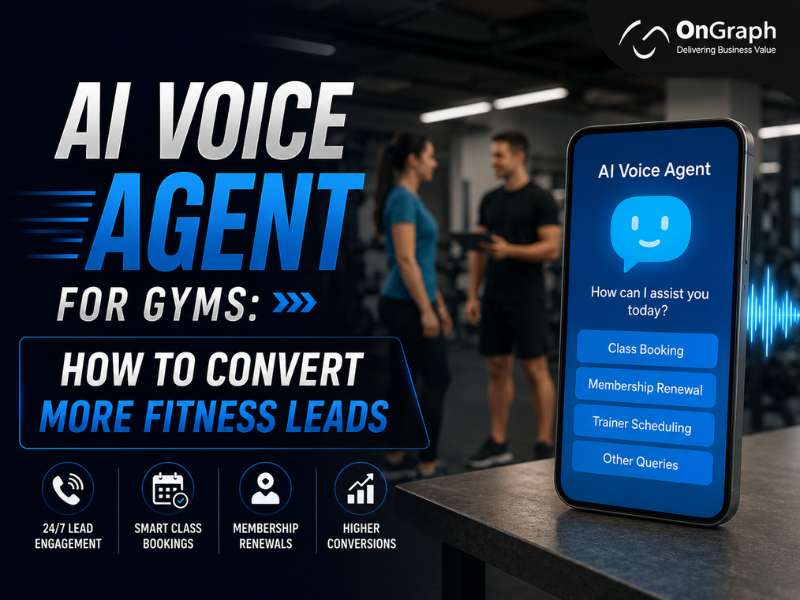
An AI Voice Agent for Gyms helps fitness businesses answer calls, qualify leads, book tours, and follow up with prospects automatically.
- It captures missed calls 24/7.
- It qualifies fitness leads faster.
- It books gym tours and trial classes.
- It connects with CRM and calendar tools.
- It helps staff focus on in-person members.
Why Gyms Need a Smarter Way to Handle Fitness Leads
An AI Voice Agent for Gyms is no longer just a futuristic idea. It is becoming a practical solution for fitness centers that want to convert more inquiries into paid members. Today, many people discover gyms through Google, social media ads, referrals, and local searches. But when they call, message, or ask about pricing, they expect a fast response.
This is where many gyms lose potential members. A prospect may call during evening peak hours, when the front desk is busy with check-ins. Another prospect may call after business hours, when no one is available. Some people may ask about membership plans, trial classes, personal training, or class schedules, but if they do not get a quick answer, they may contact another gym.
The opportunity is large because fitness participation is growing. The Health & Fitness Association reported that 81 million Americans were members of a fitness facility in 2025, which was a 5.2% increase from 2024. The same report said more than 100 million Americans used a fitness facility when day passes and guest visits were included. It also estimated nearly 7 billion fitness facility visits in 2025.
For gym owners, this means demand exists. The real challenge is not always generating leads. The bigger challenge is answering them quickly, qualifying them properly, and moving them toward a tour, trial, or membership consultation.
Convert Fitness Inquiries Into Paid Memberships Faster
What Is an AI Voice Agent?
Before choosing a solution, gym owners first need to understand What Is an AI Voice Agent. In simple words, it is a voice-based digital assistant that can speak with callers, understand their questions, and take useful actions. It can answer membership questions, explain class options, collect lead details, book appointments, and send follow-up messages.
A basic voicemail only records a message. A traditional phone menu only routes callers to departments. But an AI Voice Agent for Gyms can have a real conversation. It can ask why the person wants to join, what their fitness goal is, when they want to start, and which location is best for them.
For example, if a caller asks, “Do you offer personal training for weight loss?”, the voice agent can explain available options. Then it can ask whether the caller wants to schedule a free consultation. If the caller agrees, the system can book a slot and add the lead to the CRM.
This makes the system more useful than simple call answering. It becomes a lead qualification and booking tool. That is why many gyms now compare an AI receptionist for gyms with a traditional front desk setup.
Why Fitness Leads Are Easy to Lose
Fitness leads are usually time-sensitive. A person looking for a gym may compare three to five nearby options in one sitting. They may search for “best gym near me,” visit a few websites, and call the one that looks most relevant. If the first gym does not answer, they may quickly move to the next option.
This is especially important for paid campaigns. If a gym spends money on Google Ads, Meta Ads, or local SEO, every missed call becomes wasted marketing spend. Invoca analyzed more than 60 million phone conversations and found that 35% of calls from digital marketing are leads. It also found that 37% of those leads convert on the call.
That means phone calls are not just support requests. Many of them are revenue opportunities. When a gym misses these calls, it may lose people who were already close to booking a tour or joining.
The issue is not only phone calls. Keepme’s North America fitness industry study found that 71.4% of athletic club email inquiries received no real reply. This shows a wider response gap in the fitness industry. Many gyms are generating interest, but they are not responding fast enough to convert that interest into revenue.
How an AI Receptionist for Gyms Helps Convert More Leads
An AI receptionist for gyms helps by handling the first response instantly. It can answer when staff members are busy, unavailable, or off duty. It can also provide consistent answers, which helps protect the gym’s brand experience.
For example, a new lead may ask about monthly membership pricing. The voice agent can explain available plans based on approved information. Then it can ask whether the caller wants to visit the gym. If the caller says yes, the agent can book a tour and send a confirmation message.
This flow matters because the best gym leads often need guidance. They may not be ready to buy immediately, but they are ready to take the next step. A good AI Voice Agent for Gyms does not push too hard. It answers the question, understands the need, and suggests a logical action.
This is why the voice agent should not only say, “Our membership starts at $X.” A better response is, “We have a few options based on your goal. Are you looking for general gym access, group classes, or personal training?” This turns a pricing inquiry into a qualified sales conversation.
Build a Custom AI Receptionist for Your Fitness Brand
Main Use Cases of an AI Voice Agent for Fitness Centers
An AI voice agent for fitness centers should be designed around real gym workflows. It should not be treated as a generic phone bot. Gym callers have specific needs, and the system should help them complete those actions smoothly.
Membership Inquiry Handling
Membership questions are usually the most common. Prospects ask about monthly pricing, annual plans, family memberships, student offers, free trials, and cancellation terms. If these questions are not answered clearly, the caller may lose interest.
An AI Voice Agent for Gyms can answer these questions using approved business information. It can also capture the caller’s name, phone number, location, fitness goal, and preferred joining date. This gives the sales team useful context before they follow up.
Gym Tour Booking
Tour booking is one of the most valuable workflows. Many people want to see the facility before they join. If the call ends with only information, the lead may go cold. But if the call ends with a confirmed visit, the chance of conversion improves.
The voice agent can check available tour slots, confirm the booking, and send a text reminder. It can also create a CRM task for the sales team. This makes the lead journey smoother from first call to in-person visit.
Trial Class Booking
Many gyms, boutique studios, and fitness centers offer trial classes. This is common for yoga, Pilates, HIIT, boxing, spin, and group training studios. Fitness class booking automation can help prospects reserve a class without waiting for staff.
The voice agent can ask what type of class the person wants. Then it can check available times and book the trial. If the class is full, it can suggest another slot or add the person to a waitlist.
Personal Training Lead Qualification
Personal training leads often have higher revenue potential. But they also need better qualification. A caller may want weight loss, strength training, injury recovery, or sports performance support.
With AI lead qualification for gyms, the voice agent can ask goal-based questions. It can collect fitness goals, preferred schedule, trainer preference, and readiness to start. Then it can send the qualified lead to the right sales or training team.
After-Hours Lead Capture
Many people research gyms after work or late at night. If the phone rings outside business hours, the gym may lose that lead. A virtual front desk for gyms can answer at any time and keep the lead moving forward.
This is useful for local gyms, franchises, and multi-location fitness brands. It makes the business available even when human staff are not present.
Human Front Desk vs AI Voice Agent for Gyms
A strong gym does not need to choose between staff and automation. The better approach is to combine both. Human staff should focus on members, tours, retention, and relationship building. The voice agent should handle repetitive calls, lead intake, booking, and basic support.
| Area | Human Front Desk | AI Voice Agent for Gyms |
| Availability | Limited by working hours | Available 24/7 |
| Call handling | One call at a time | Multiple calls at once |
| Lead capture | Depends on staff availability | Captures every inquiry |
| Booking | Manual process | Automated booking flow |
| CRM updates | Often delayed | Updates in real time |
| Best use | Member care and tours | Lead intake and repetitive calls |
This comparison helps gym owners understand the real value. An AI Voice Agent for Gyms should not replace the human touch. It should protect staff time and make sure no serious lead is ignored.
Real Case Studies: How Gyms Are Using Voice Automation
Case Study 1: UFC Gym
UFC Gym used Replify’s voice automation to improve speed-to-lead and reduce repetitive workload. According to the case study, UFC Gym automated 4,000 calls and saved 142 staff hours within 30 days.
This case is important because it shows how a fitness business can improve both sales response and staff productivity. The system did not just answer calls. It helped the team respond faster and reduce manual pressure during busy periods.
For gym owners, the lesson is clear. The first use case should be tied to measurable results. These may include calls answered, tours booked, staff hours saved, and leads captured.
Case Study 2: Club 24 Concept Gyms
Club 24 Concept Gyms is a seven-location fitness chain in Connecticut. It used Replify to manage call automation across locations. The case study says the company automated 6,000+ calls per month and saved about 65 staff hours.
This example is useful for multi-location gyms. When a business has several branches, call handling becomes harder to manage consistently. A voice agent can standardize answers, support billing workflows, and help staff focus on members.
The bigger takeaway is that voice automation is not only for new leads. It can also support billing, member questions, class updates, and reactivation campaigns.
Case Study 3: Dynamic Fitness
Dynamic Fitness used voice automation to reduce missed calls and improve lead capture. The case study reports 6X more leads and 180 staff hours saved monthly after using Replify’s AI receptionist and sales workflows.
This case highlights a common hidden problem. Many gyms already have potential leads calling them. They are just not capturing those leads properly. Once missed calls are handled better, lead volume can improve without increasing ad spend.
How an AI Voice Agent Fits Into Gym Lead Generation Software
Many gyms already use some form of gym lead generation software. This may include a CRM, booking system, website form, Meta lead ads, Google Ads, email automation, or SMS tools. The problem is that these tools often work separately.
An AI Voice Agent for Gyms becomes more powerful when it connects these systems. For example, a Facebook lead can trigger an outbound call. A missed call can create a CRM lead. A booked tour can create a calendar event. A no-show can trigger a follow-up message.
This creates a connected lead funnel. The caller does not need to wait for a human response. The staff does not need to manually enter every detail. The business owner gets better tracking across phone calls, bookings, and conversions.
OnGraph’s AI Voice Agent service supports workflows like appointment booking, CRM updates, SMS actions, and system integrations. This makes it suitable for businesses that want a custom voice workflow instead of a generic answering tool.
Step-by-Step Guide to Implement an AI Voice Agent for Gyms
Step 1: Identify Your Most Common Calls
Start by listing the calls your gym receives every week. Most fitness businesses receive questions about pricing, membership plans, opening hours, trial classes, personal training, cancellations, billing, and class schedules.
This step helps you avoid overbuilding. You do not need to automate every process from day one. Start with the call types that create the most pressure on your staff and the most revenue opportunity for your business.
Step 2: Create a Clear Knowledge Base
Your voice agent needs accurate information. Create a simple knowledge base with membership pricing, class details, location information, trainer availability, parking instructions, trial offers, and cancellation policies.
This content should be reviewed regularly. If pricing changes or class schedules change, the voice agent should be updated. A helpful system depends on accurate business information.
Step 3: Build a Lead Qualification Script
The script should feel natural, not robotic. It should ask short and useful questions. For example, it can ask, “What is your main fitness goal?” Then it can ask, “When would you like to start?”
A strong script should identify whether the caller wants gym access, group classes, personal training, or a trial session. This helps your team understand the lead before making a follow-up call.
Step 4: Connect CRM, Calendar, and SMS
The real value comes when the voice agent takes action. It should not only answer questions. It should book tours, update CRM records, send SMS confirmations, and create follow-up reminders.
This is where custom development matters. A generic tool may answer calls, but it may not match your exact sales workflow. An ai voice agent development company can help design a system around your business process.
Step 5: Add Human Handoff Rules
Some calls should always go to a human. These include complaints, billing disputes, injury-related questions, cancellation requests, and complex membership issues.
The voice agent should know when to transfer the call or create a callback task. This protects the customer experience and keeps sensitive conversations human-led.
Step 6: Track KPIs Weekly
You should measure the system every week. Important KPIs include answer rate, missed call recovery, booked tours, trial class bookings, lead-to-tour rate, tour-to-member rate, staff hours saved, and revenue from phone leads.
The Health & Fitness Association’s benchmarking report found that fitness facilities had 9.9% median revenue growth, 5.5% net membership growth, and 66.4% member retention in 2024.
These numbers show that growth is possible. But gyms need better systems to capture, convert, and retain members.
Automate Lead Calls, Bookings, and Follow-Ups in One Flow
Connect AI calling with CRM, SMS, and calendar tools so every gym lead is captured, tracked, and followed up without manual effort.
AI Voice Agent Platforms for Automation: Build or Buy?
Many businesses search for AI Voice Agent Platforms for Automation because they want a fast way to launch. Ready-made platforms can be useful for simple call answering and standard workflows. But custom development may be better when the gym needs deeper control.
| Option | Best For | Benefits | Limitations |
| Ready-made platform | Small gyms and studios | Faster setup and lower cost | Limited customization |
| Custom voice agent | Franchises and enterprises | Full workflow control | More planning needed |
| Hybrid approach | Growing fitness brands | Fast launch with custom logic | Needs technical partner |
A small fitness studio may only need an AI receptionist for gyms that answers calls and books classes. A large fitness chain may need location-based routing, CRM integration, multilingual support, billing workflows, and custom reporting.
This is why the right choice depends on your business model. If your goal is only call answering, a simple platform may work. If your goal is lead conversion, retention, and automation across systems, custom development is better.
Real-World Examples of AI Voice Agent Workflows for Gyms
A practical AI Voice Agent for Gyms can support many daily workflows. For example, it can answer a new membership call, explain plans, and book a tour. It can also ask the caller about their fitness goal and preferred joining date.
Another workflow is trial class booking. A prospect may ask about a yoga or HIIT class. The voice agent can check availability, reserve a slot, and send a confirmation message. This improves the experience and reduces staff workload.
It can also support personal training inquiries. The agent can collect the caller’s goal, preferred schedule, and trainer preference. Then it can route the lead to the right trainer or sales consultant.
For existing members, the system can answer schedule questions, confirm class times, share holiday hours, and help with basic billing questions. This creates a better member experience without overloading the front desk.
For marketing teams, the system can call fresh ad leads quickly. If someone fills out a Meta or Google form, the agent can call within minutes, qualify the lead, and book a consultation. This helps improve speed-to-lead.
Common Mistakes to Avoid
The first mistake is treating the voice agent like a basic answering machine. If it only says business hours and pricing, it will not create enough business value. It should guide callers toward booking, trial, or consultation.
The second mistake is using generic scripts. Gym callers want specific answers. They ask about real pricing, class times, trainers, facilities, parking, and trial offers. Generic responses can make the gym look less trustworthy.
The third mistake is not connecting the system with CRM and calendar tools. If call data stays separate, the sales team cannot follow up properly. Every qualified lead should be captured and tracked.
The fourth mistake is removing human support completely. A virtual front desk for gyms should support staff, not block callers from reaching them. Complex and emotional conversations should still go to humans.
The fifth mistake is not reviewing call data. Call recordings and summaries can reveal common objections. They can show what people ask before joining. This insight can improve sales scripts, landing pages, ads, and offers.
How OnGraph Can Help Build an AI Voice Agent for Gyms
OnGraph can help fitness businesses build a custom AI Voice Agent for Gyms that matches their sales process. The solution can answer calls, qualify leads, book appointments, update CRM data, and send follow-up messages.
This is useful for gyms that do not want a one-size-fits-all tool. A custom solution can be designed around location rules, membership plans, trainer availability, trial offers, and internal workflows.
For example, a gym chain may want different call flows for each branch. A boutique studio may want class booking automation. A franchise may want standardized lead qualification across locations.
OnGraph’s AI Voice Agent solution is built for 24/7 customer support, sales, automation, multilingual conversations, and system integrations.
Key Takeaways
An AI Voice Agent for Gyms helps fitness businesses respond faster, capture more leads, and reduce front desk workload. It is especially useful for membership inquiries, gym tour booking, personal training leads, and trial class scheduling.
The best results come when the system connects with CRM, calendar, SMS, and reporting tools. This turns phone conversations into measurable sales opportunities.
For small gyms, it can act as a 24/7 receptionist. For larger fitness brands, it can become a scalable lead qualification and member support system.
Final Thoughts
Gyms are competing in a market where prospects expect fast answers and simple booking. The fitness industry is growing, but that also means customers have more choices. If your gym misses calls or delays follow-up, another fitness business can win that lead.
An AI Voice Agent for Gyms helps solve this problem by answering calls instantly, qualifying prospects, booking tours, and supporting members. It does not remove the human side of fitness. Instead, it gives your team more time to focus on people who are already inside the gym.
For founders, agencies, product managers, and fitness enterprises, this is the right time to consider voice automation. The goal is not only to sound modern. The real goal is to convert more fitness leads with faster response, better tracking, and a smoother customer journey.
FAQs
An AI Voice Agent for Gyms is a voice-based assistant that answers calls, speaks with prospects, and helps fitness businesses manage inquiries. It can respond to membership questions, explain class options, book gym tours, schedule trial sessions, and collect lead details. Unlike voicemail, it can have a real-time conversation with callers. For gym owners, this means fewer missed calls and faster lead response. It works best when connected with CRM, calendar, and SMS tools.
An AI Voice Agent for Gyms helps convert more leads by answering calls instantly and guiding prospects toward the next step. When someone asks about pricing, classes, or personal training, the agent can collect their details and offer a tour or trial session. Faster response improves the chance of conversion because fitness leads often compare multiple gyms. Instead of losing calls during busy hours, gyms can capture inquiries 24/7 and send qualified leads to the sales team.
An AI receptionist for gyms should support front desk staff, not fully replace them. It is best for repetitive tasks like answering common questions, booking tours, confirming class times, and capturing lead details. Human staff should still handle in-person service, complex member issues, complaints, and relationship-building. This balance helps gyms improve response speed while keeping the human experience strong. In most cases, automation works best as a virtual front desk assistant.
An AI voice agent for fitness centers can handle membership inquiries, gym tour bookings, trial class scheduling, personal training questions, and after-hours calls. It can also collect fitness goals, preferred locations, contact details, and joining timelines. Some systems can send SMS confirmations, update CRM records, and create follow-up tasks for staff. For multi-location gyms, it can route calls based on location or service type. This makes daily operations smoother and more organized.
Yes, an AI Voice Agent for Gyms can be very useful for small studios, boutique gyms, yoga centers, Pilates studios, and personal training businesses. Smaller teams often miss calls because staff members handle classes, check-ins, and member support. A voice agent can answer basic questions, book trial sessions, and capture new leads without adding extra front desk staff. This helps small fitness businesses look more responsive and professional while keeping operational costs controlled.
Gyms should look for call answering, lead qualification, tour booking, class scheduling, CRM integration, SMS follow-up, multilingual support, and human handoff. A good system should also understand common gym questions and update lead records automatically. For better results, it should connect with calendars, membership systems, and marketing tools. The most important feature is not just answering calls. The real value comes from turning calls into booked tours, trials, and consultations.
The cost depends on features, integrations, call volume, and customization level. A basic AI receptionist setup may cost less if it only answers common questions and captures leads. A custom AI Voice Agent for Gyms with CRM integration, calendar booking, SMS follow-up, multilingual support, and reporting will cost more. Fitness chains and enterprises may also need multi-location workflows. The best approach is to start with core lead conversion workflows, then expand after results are proven.
About the Author

Let’s Create Something Great Together!
Latest Blog



Let’s have a conversation today!


India
ONGRAPH TECHNOLOGIES PRIVATE LIMITED,
SDF L-1, NSEZ,
Sector 81, Block L, Phase-2,
Noida, Uttar Pradesh-201305

USA
OnGraph Technologies,
120 Bethpage Rd, Suite 304,
Hicksville, NY 11801, USA

Canada
7-1039 CEDARGLEN GATE,
Mississauga, Ontario,
Canada L5C 3A7

UK
89 Banstead Road South,
Sutton, Surrey, SM2 5LH
United Kingdom

Malaysia
G-3A, Amaya Maluri, Jalan
Jejaka 2, Taman Maluri,
KL–55100, Malaysia

Singapore
10 Anson Road,#26-04
International Plaza,
Singapore (079903)