

In this article
- Why Dental Clinics Need Better Call Automation
- What Is an AI Voice Agent for Dental Clinics?
- Why Dental Clinics Lose Calls and Appointments
- How an AI Dental Receptionist Works
- Core Use Cases for Dental Call Automation
- Comparison: Human Front Desk vs AI Voice Agent
- Mini Case Study 1: Missed Dental Calls Became Booked Appointments
- Mini Case Study 2: Automated Reminders Reduced Dental No-Shows
- Step-by-Step: How to Implement an AI Voice Agent for Dental Clinics
- Ready-Made Tool vs Custom Voice Agent
- Real-World Examples of Dental Voice Workflows
- What to Look for in an AI Phone Answering Service for Dental Clinics
- Where OnGraph Fits
- How This Connects With Other AI Development Solutions
- Key Takeaways
- Final Thoughts
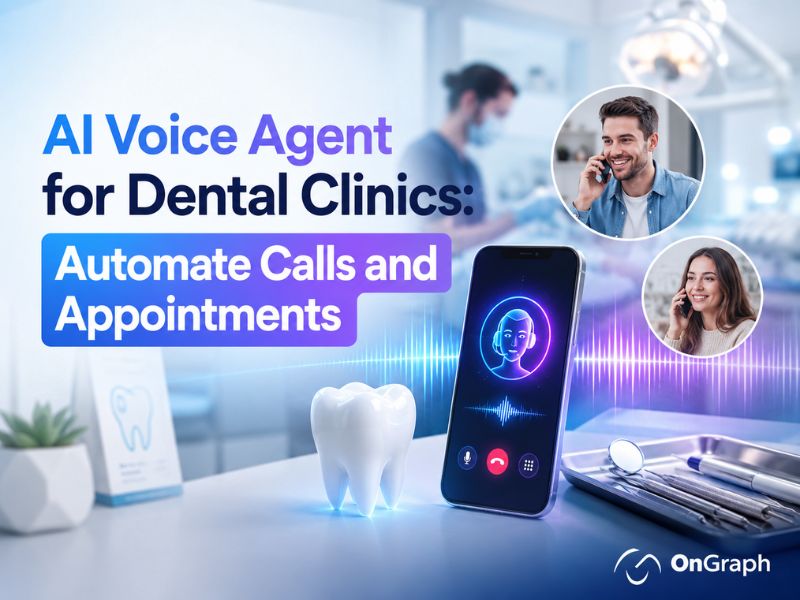
An AI Voice Agent for Dental Clinics helps dental practices answer calls, book appointments, and support patients 24/7.
- It reduces missed calls.
- It automates appointment scheduling.
- It supports patient intake.
- It helps front desk teams save time.
- It connects with clinic systems.
Why Dental Clinics Need Better Call Automation
An AI Voice Agent for Dental Clinics helps practices manage patient calls without overloading the front desk. Most dental teams handle calls, check-ins, insurance questions, payments, appointment changes, and patient concerns together. During busy hours, even a strong team can miss important calls.
Dental staffing pressure makes this harder. The American Dental Association says four out of ten dental practices try to hire assistants or hygienists in any month. Hiring remained difficult in late 2024, especially for hygienists and assistants.
That creates a clear business problem. Dental offices need to answer calls quickly, but front desk teams already have too much work. Missed calls can become missed appointments, missed patients, and lost revenue.
An AI Voice Agent for Dental Clinics can support this gap. It answers routine calls, books appointments, collects basic details, and sends reminders. Staff can then focus on in-office patients and complex conversations.
Never Miss a Dental Patient Call Again
What Is an AI Voice Agent for Dental Clinics?
An AI Voice Agent for Dental Clinics is a voice-based assistant that speaks with patients over phone calls. It can understand requests, answer common questions, and take actions inside connected systems.
For example, a patient may call and ask, “Can I book a cleaning next week?” The voice agent can check available slots and confirm the appointment. It can also send an SMS confirmation after the call.
Unlike voicemail, it records not only messages. Unlike a basic IVR, it can handle natural questions. A well-designed agent can support appointment booking, rescheduling, reminders, intake, and escalation.
This makes it different from basic dental appointment scheduling software. Scheduling software manages calendars. A voice agent talks with patients and uses their calendar during the call.
Why Dental Clinics Lose Calls and Appointments
Dental practices lose opportunities when calls are unanswered or poorly handled. Peerlogic reported that only 68% of new patient calls are answered. It also reported that only 42% of answered calls become appointments.
That gap is expensive. Peerlogic’s analysis said practices could lose 71 potential new patients per 100 calls. The same case reported 244 additional appointments valued at above $204,000 after process improvements.
Patients usually call when they are ready to act. Some want a cleaning. Others need emergency care. Many want pricing, insurance answers, or next available slots.
When the call goes unanswered, the patient may call another clinic. A virtual receptionist for dentists solves this by keeping the phone line active. It does not replace human care. It protects the first patient touchpoint.
How an AI Dental Receptionist Works
An AI dental receptionist follows a controlled conversation flow. It listens to the patient, identifies the request, checks available information, and completes the next step.
A typical workflow may look like this:
- The patient calls the clinic.
- The agent greets the patient.
- It identifies the reason for the call.
- The agent checks available appointment slots.
- It collects contact and insurance details.
- The booking is confirmed.
- A message is sent to the patient.
- Staff receive a summary.
This process is useful for many call types. It can handle new patient inquiries, rescheduling, appointment reminders, payment questions, and general FAQs.
A good AI receptionist for dental offices should also know when to stop. Urgent pain, bleeding, swelling, or complaint calls should be routed to staff.
Core Use Cases for Dental Call Automation
1. New Patient Appointment Booking
New patient calls are valuable. These patients may be comparing multiple clinics. A fast answer can help your practice win the booking.
An AI phone answering service for dental clinics can collect the patient’s name, phone number, preferred time, and treatment need. It can then offer available slots and confirm the booking.
This improves response speed. It also gives staff cleaner information before the visit.
2. Appointment Rescheduling
Patients often call to reschedule appointments. A manual process can interrupt front desk work throughout the day.
With dental call automation, the agent can check the calendar and suggest alternate times. After confirmation, it can send SMS or email updates.
This keeps the schedule organized. It also reduces back-and-forth calls.
3. Appointment Reminders
Reminders can improve schedule compliance. Dental Tribune reported that automated appointment reminders reduced dental no-shows by 22.95% in a study.
An AI Voice Agent for Dental Clinics can make reminder calls and handle replies. If a patient needs to reschedule, the agent can offer new slots.
That is more useful than one-way SMS. The patient can act during the reminder conversation.
4. Insurance and Intake Support
Dental teams spend time collecting patient details before visits. The agent can gather insurance information, the reason for the visit, and basic intake details.
It should not provide a medical diagnosis. Instead, it should collect information and route the patient correctly.
AgentZap says dental receptionists can capture new patient information, collect insurance details, and triage emergencies.
5. Emergency Call Routing
Dental emergencies require careful handling. A caller may report severe pain, swelling, trauma, or infection signs.
The agent should identify urgent language. Then it should transfer the call or create a high-priority alert.
This workflow needs strict guardrails. Healthcare voice systems should be designed for safety and privacy.
Turn Missed Calls Into Booked Appointments
Comparison: Human Front Desk vs AI Voice Agent
| Area | Human Front Desk | AI Voice Agent for Dental Clinics |
| Availability | Limited by working hours | Available 24/7 |
| Call volume | Handles one call at a time | Handles many calls |
| Appointment booking | Manual calendar work | Automated scheduling flow |
| Reminders | Often manual or SMS-based | Can call and reschedule |
| Patient intake | Staff collects details | Agent collects basics |
| Best use | Complex patient care | Routine calls and intake |
The best model is not human versus automation. The best model is human plus automation.
Front desk staff should handle sensitive, complex, or emotional calls. The voice agent should handle routine calls that slow the team down.
Mini Case Study 1: Missed Dental Calls Became Booked Appointments
Peerlogic shared a dental call performance case involving missed calls and conversion tracking. The practice booked 244 additional appointments. The reported value exceeded $204,000.
The same source reported two important benchmarks. Only 68% of new patient calls were answered. Among answered calls, 42% became appointments.
This case shows why call handling matters. More marketing spend is not always the answer. Sometimes, clinics need better call capture and follow-up.
An AI Voice Agent for Dental Clinics helps fix that operational gap. It keeps calls from turning into voicemail. It also turns routine inquiries into scheduled visits.
Mini Case Study 2: Automated Reminders Reduced Dental No-Shows
Dental Tribune reported a study on automated appointment reminders in dental practices. The study found that no-shows fell by 22.95% after reminders were implemented. It also documented production gains from better schedule compliance.
This case is useful for clinics considering dental appointment scheduling software. Reminder automation should not only send messages. It should help patients confirm, cancel, or reschedule.
Voice reminders can add more value here. A patient can reply during the call. The agent can then update the schedule immediately.
Step-by-Step: How to Implement an AI Voice Agent for Dental Clinics
Step 1: List Your Top Call Reasons
Start with real call categories. Most dental clinics receive calls about appointments, pricing, insurance, timings, emergency needs, payments, and directions.
This step keeps the first version focused. You do not need to automate everything at once.
Step 2: Build a Safe Knowledge Base
The agent needs approved answers. Include clinic hours, services, doctors, locations, appointment types, payment options, and insurance basics.
Avoid diagnosis content. The agent should guide patients toward staff or appointments when needed.
Step 3: Define Booking Rules
Booking rules are critical. The agent must know appointment durations, provider availability, treatment categories, and location rules.
For example, a cleaning may need one slot. Emergency visits may need priority handling.
Step 4: Connect PMS, Calendar, or CRM
A voice agent becomes powerful when it takes action. It should connect with calendars, patient systems, or CRMs.
OnGraph’s AI Voice Agent for Healthcare supports scheduling integrations, appointment booking, SMS alerts, analytics, and healthcare-grade workflows.
Step 5: Add Human Escalation
Some calls must reach staff. Use escalation rules for pain, swelling, bleeding, complaints, billing disputes, and anxious patients.
This protects the patient experience. It also keeps the clinic in control.
Step 6: Test Real Call Scenarios
Use real examples before launch. Test new patient calls, cancellations, rescheduling, emergency phrases, and insurance questions.
Strong testing reduces errors. It also improves patient trust.
Step 7: Track Conversion Metrics
Track more than answered calls. Measure booked appointments, rescheduled visits, missed-call recovery, no-show rate, and staff time saved.
These numbers show whether the system improves operations.
Ready-Made Tool vs Custom Voice Agent
| Factor | Ready-Made AI Receptionist | Custom AI Voice Agent |
| Launch speed | Faster setup | Needs planning |
| Dental workflows | Prebuilt templates | Built around your process |
| Integrations | Vendor-dependent | Custom PMS and CRM logic |
| Compliance controls | Depends on vendor | Designed for your rules |
| Brand voice | Limited control | Fully customized |
| Best for | Small clinics | DSOs, chains, unique workflows |
Ready-made tools can work for simple clinics. Custom solutions are better for complex healthcare workflows.
A DSO may need multi-location routing. A specialty clinic may need specific intake rules. A healthcare product company may need deeper system integration.
This is where AI Voice Agent Development Solutions make sense. They help you build workflows around your actual operations.
Real-World Examples of Dental Voice Workflows
Example 1: New Patient Cleaning Call
A patient asks for a cleaning next week. The agent checks availability and books the visit.
The system sends a confirmation. Staff receive a call summary.
Example 2: Emergency Tooth Pain Call
A caller reports severe tooth pain. The agent identifies urgency and transfers the call.
If staff are unavailable, it creates a priority callback.
Example 3: Missed Call Recovery
A patient calls during lunch hours. The agent answers and captures the request.
No voicemail is needed. The clinic does not lose the opportunity.
Example 4: Insurance Intake
The agent asks for insurance provider details. It stores the information for staff review.
This reduces front desk work before the visit.
Example 5: Reminder and Reschedule Call
The agent reminds a patient about tomorrow’s visit. The patient asks to reschedule.
The agent offers open slots and updates the appointment.
Example 6: Multi-Location DSO Routing
A patient calls the central number. The agent asks for ZIP code or preferred location.
Then it routes or books with the right clinic.
What to Look for in an AI Phone Answering Service for Dental Clinics
A strong AI phone answering service for dental clinics should include more than call answering. It should complete useful actions.
Look for these features:
- 24/7 call answering
- Appointment booking
- Rescheduling support
- Patient intake
- Reminder calls
- Human handoff
- PMS or calendar integration
- Call summaries
- Multilingual support
- Privacy and security controls
- Emergency escalation rules
- Analytics dashboard
Viva AI claims support for multilingual patient communication and dental front-office workflows. Dentina positions its solution around PMS booking and 24/7 dental reception.
These examples show where the market is moving. Dental teams want voice systems that act, not just answer.
Where OnGraph Fits
OnGraph offers an AI Voice Agent for Healthcare solutions for appointment booking, reminders, patient support, and system integrations. The service page mentions scheduling integrations, SMS alerts, analytics, warm transfers, and healthcare-focused privacy controls.
For dental clinics, OnGraph can help build an AI Voice Agent for Dental Clinics around real workflows. This can include calls, appointment booking, patient intake, reminders, and staff escalation.
Launch a Custom AI Voice Agent for Your Clinic
Need dental call automation? Build a tailored AI voice agent for appointments, reminders, and patient support.
How This Connects With Other AI Development Solutions
The same voice automation approach can support other service industries. For example, an AI Voice Agent for Gyms can qualify leads and book tours. Dental clinics need similar speed, but with stronger healthcare guardrails.
Healthcare voice workflows require more care. Patient privacy, emergency routing, and medically safe responses matter. That is why dental clinics should choose experienced AI Development Solutions teams.
A strong technology partner can design the system, test call flows, and integrate tools safely.
Key Takeaways
An AI Voice Agent for Dental Clinics helps practices answer calls, book appointments, and reduce front desk pressure.
Dental call automation is most useful for new patient booking, reminders, rescheduling, intake, and missed-call recovery.
The system should not replace staff. It should support them with faster response and cleaner workflows.
Custom development is valuable when clinics need PMS integrations, multi-location logic, and healthcare-grade controls.
Final Thoughts
Dental clinics compete on access, trust, and convenience. Patients want quick answers, easy scheduling, and clear communication.
An AI Voice Agent for Dental Clinics helps meet these expectations. It answers calls after hours, books visits, sends reminders, and supports staff.
The best results come from a focused rollout. Start with appointment calls, reminders, and missed-call recovery. Then expand into intake, payments, and multi-location workflows.
For clinics, DSOs, founders, and healthcare product teams, the goal is simple. Use voice automation to improve patient access without losing the human touch.
FAQs
An AI Voice Agent for Dental Clinics is a voice-based assistant that answers patient calls, understands basic requests, and helps complete routine front desk tasks. It can book appointments, reschedule visits, answer clinic timing questions, collect patient details, and send reminders. Unlike voicemail, it can respond in real time. For dental clinics, this helps reduce missed calls and improves patient access, especially during busy hours or after office closing time.
An AI Voice Agent for Dental Clinics helps book more appointments by answering calls instantly and guiding patients toward available time slots. When a patient asks about cleaning, tooth pain, consultation, or follow-up visits, the system can check availability and confirm a booking. It can also send SMS or email confirmations after the call. This reduces back-and-forth communication and helps clinics capture patients who may otherwise call another dental office.
An AI dental receptionist should support front desk staff, not fully replace them. It is best for repetitive tasks like answering FAQs, booking appointments, sending reminders, handling rescheduling requests, and collecting basic intake details. Human staff should still manage complex patient questions, billing disputes, emergency cases, insurance issues, and sensitive conversations. The best setup is a hybrid model where automation handles routine calls and staff focus on patient care.
An AI receptionist for dental offices can handle appointment booking, rescheduling, missed-call recovery, patient reminders, clinic hour questions, location details, service inquiries, and basic intake collection. Some systems can also support insurance detail collection, callback requests, and emergency call routing. For multi-location dental practices, it can route patients to the right branch. When connected with scheduling tools, it can update calendars and notify staff automatically.
Yes, an AI phone answering service for dental clinics can be useful for small practices with limited front desk staff. Small clinics often miss calls when the team is assisting in-office patients, handling check-ins, or managing treatment schedules. A voice agent can answer calls 24/7, capture new patient inquiries, and book appointments without adding more staff. This helps smaller dental offices look more responsive and professional.
Dental clinics should look for 24/7 call answering, appointment booking, rescheduling, reminder calls, patient intake, human handoff, call summaries, multilingual support, and calendar integration. The system should also support emergency escalation and privacy-focused workflows. A good AI Voice Agent for Dental Clinics should not only answer calls. It should help convert patient inquiries into confirmed appointments while keeping sensitive cases routed to staff.
The cost depends on features, call volume, integrations, and customization needs. A basic setup may include call answering, FAQs, and appointment requests. A more advanced AI Voice Agent for Dental Clinics may include calendar integration, PMS or CRM connection, SMS reminders, multilingual support, analytics, and emergency routing. Dental groups and DSOs may need multi-location workflows, which can increase the development scope.
About the Author

Let’s Create Something Great Together!
Latest Blog

Let’s have a conversation today!


India
ONGRAPH TECHNOLOGIES PRIVATE LIMITED,
SDF L-1, NSEZ,
Sector 81, Block L, Phase-2,
Noida, Uttar Pradesh-201305

USA
OnGraph Technologies,
120 Bethpage Rd, Suite 304,
Hicksville, NY 11801, USA

Canada
7-1039 CEDARGLEN GATE,
Mississauga, Ontario,
Canada L5C 3A7

UK
89 Banstead Road South,
Sutton, Surrey, SM2 5LH
United Kingdom

Malaysia
G-3A, Amaya Maluri, Jalan
Jejaka 2, Taman Maluri,
KL–55100, Malaysia

Singapore
10 Anson Road,#26-04
International Plaza,
Singapore (079903)