


In this article
- Why Businesses Need a Private Taxi Booking App?
- Use Cases for a Private Taxi Booking App
- How does the Pre-Assigned Driver System work?
- Key Features Required in a Private Taxi Booking App
- Technical Architecture of a Pre-Assigned Driver System
- Building the App: Step-by-Step Process
- Cost to Build a Private Taxi Booking App
- Real-World Case Studies
- Benefits of a Private Taxi Booking App
- Future Trends for Private Taxi Apps
A Private Taxi Booking App helps businesses, chauffeur operators, and exclusive transport networks manage bookings for private customers.
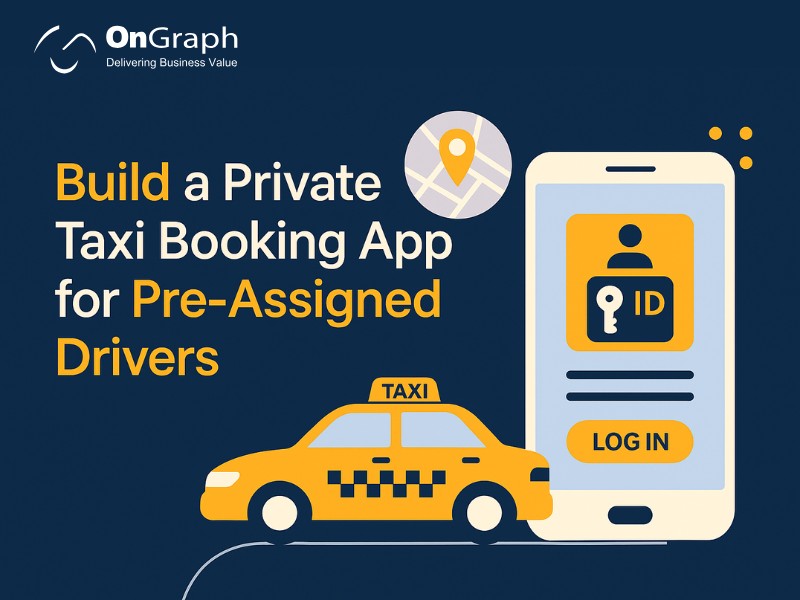
This model is different from regular taxi apps. Riders do not search for nearby drivers. Instead, each rider connects only with a pre-assigned driver system using a unique driver ID.
This approach ensures personalized service, strong customer relationships, and reliable transportation experiences.
Private taxi platforms are becoming popular across corporate travel, airport transfers, luxury chauffeur services, and specialized mobility businesses.
Research shows that the global chauffeur and private transport market is projected to exceed $150 billion by 2027, driven by premium and personalized travel demand. Strong digital tools are essential for businesses operating in this market.
A dedicated app helps centralize bookings, streamline driver schedules, and automate customer communication.
This guide explains how to build an advanced private taxi solution with a driver ID login system. You will learn about features, architecture, workflows, use cases, pricing, payment integrations, and technical steps.
Why Businesses Need a Private Taxi Booking App?
A Private Taxi Booking App solves major operational challenges for private fleets. Traditional systems rely on phone calls, text messages, or WhatsApp communication.
These methods work for small operations. They fail when fleets grow beyond 20–50 drivers.
Common challenges before digitization:
- No centralized booking history
- Difficult driver assignment
- Weak customer retention
- Limited transparency
- Manual scheduling errors
- No automated reminders
- No customer app visibility
- No structured payment process
A dedicated app solves these problems by creating a structured digital workflow.
Use Cases for a Private Taxi Booking App
A Private Taxi Booking App serves several industries.
1. Corporate chauffeur services
Corporations maintain exclusive relationships with trusted drivers. A corporate taxi booking app supports repeat bookings, scheduled rides, and pre-approved drivers.
2. Airport transfer services
Private car operators handle scheduled airport pickups. Booking reminders and pre-assigned drivers improve reliability.
3. Luxury chauffeur companies
These businesses rely on brand loyalty and personalized service. A chauffeur booking software system helps build long-term relationships.
4. Hotel and travel agencies
Premium hotels assign private drivers for VIP guests. Driver ID-based systems ensure booking accuracy.
5. B2B fleet operations
An enterprise taxi solution helps B2B operators manage internal fleets and share jobs among trusted drivers.
6. Closed driver groups
Some regions use large driver communities. Drivers share jobs internally. A B2B taxi booking system supports booking requests that flow only to assigned drivers.
How does the Pre-Assigned Driver System work?
A pre-assigned driver system changes the traditional taxi flow. Instead of open driver availability, riders choose or are linked to one driver.
1. Customer signs up
During registration, customers must enter a unique driver ID.
2. App connects rider to driver
The platform stores the association between the rider and driver.
3. Booking triggers notifications
Every booking goes directly to the assigned driver.
4. Driver accepts or shares job
Drivers can:
- Accept the job
- Forward the job internally through approved channels
5. Customer receives updates
Customers receive notifications when:
- Driver accepts
- Driver is en route
- Driver arrives
- Ride begins
- Ride completes
This offers seamless communication and reliable scheduling.
Key Features Required in a Private Taxi Booking App
A strong app includes advanced Taxi App Features for both drivers and customers. Below are the essential modules.
1. Customer App Features
- Driver ID-based registration: Customers enter their driver’s ID during sign-up.
- Future booking scheduler: Customers can schedule rides weeks in advance.
- Automatic reminders: The system sends reminders 30–45 minutes before pickup.
- Real-time status updates: Customers see updated driver status, including “On the Way” and “Arrived.”
- Ride history: Customers view previous trips and invoices.
- Secure in-app payments
Integrations include:
- Stripe
- PayPal
- Square
- Local payment gateways
This aligns with Taxi App Payment Gateway Integration standards.
2. Driver App Features
- Assigned booking notifications: Drivers get immediate alerts for new jobs.
- Calendar with upcoming rides: Future bookings appear with date and time.
- Route navigation: Integrated maps guide the driver.
- Job handover option: Drivers can forward jobs to approved partners.
- Arrival and completion updates: Drivers update trip status with one click.
- Wallet and earnings: Shows balance, payouts, and deductions if applicable.
3. Admin Panel Features
- Driver and customer management: Admins can add, edit, or disable users.
- Booking assignment logic: Admins control driver-customer pairings.
- Payment overview: Track gateway payouts and financial statements.
- Reports and analytics
Admins view:
- Total bookings
- Customer activity
- Driver performance
- Revenue metrics
- Custom pricing modules
Admins configure specific Taxi App Pricing Models, including:
- Flat fare
- Distance-based
- Hourly rates
- Surge pricing
Technical Architecture of a Pre-Assigned Driver System
Building a robust Private Taxi Booking App requires clear architecture.
1 User authentication module
- Supports driver ID input
- Validates customer-driver pairing
2. Booking management module
Handles bookings, cancellations, scheduling, and reminders.
3. Dispatch logic
Matches bookings only to the driver assigned to each customer.
4. Notifications engine
Sends push notifications and email alerts.
5. Navigation and routing engine
Uses Google Maps or Mapbox API.
6. Payment integration layer
Supports multiple gateways with strong encryption.
7. Driver wallet module
Stores transaction details.
8. Admin control dashboard
Centralizes configuration and reports.
This structured architecture ensures long-term scalability and reliability.
Building the App: Step-by-Step Process
A Taxi App Development Company follows a standard process to build such solutions.
1. Requirement analysis
Identify:
- Driver ID workflow
- Customer segmentation
- Payment rules
- Dispatch logic
2. UI/UX design
Focus on:
- Simple screens
- Easy booking flow
- Clear driver status updates
3. Development
Includes:
- Customer app
- Driver app
- Admin panel
- Backend APIs
4. Quality assurance
Test:
- Booking flow
- Notifications
- Driver ID mapping
- Payment processing
5. Deployment
Launch the apps on:
- Google Play Store
- Apple App Store
6. Post-launch support
Ongoing updates include:
- Feature enhancement
- Bug fixes
- Security updates
Cost to Build a Private Taxi Booking App
App cost depends on required features and complexity.
If you choose a White-label taxi solution, cost reduces significantly.
Cost ranges:
- Basic app: $8,000 – $12,000
- Advanced features: $15,000 – $25,000
- Enterprise taxi solution: $30,000+
Startups can build a Taxi App Under $10000 using minimal viable features.
Real-World Case Studies
Below are simplified case studies that reflect actual industry operations.
1. Chauffeur company increasing efficiency by 60%
A UK-based chauffeur company replaced WhatsApp dispatching with a custom app. The pre-assigned driver system helped reduce scheduling errors and improved response time. The company achieved:
- 60% faster driver coordination
- 40% fewer missed bookings
- 20% higher customer retention
2. Corporate fleet improving reliability
A corporate fleet with 120 drivers used a corporate taxi booking app with ID mapping. Executives received consistent service from their assigned drivers. The company saw:
- Higher satisfaction rates
- Reduced dispatch confusion
- Better travel record management
Benefits of a Private Taxi Booking App
- Improved customer loyalty: Customers trust assigned drivers.
- Zero booking confusion: Each booking goes to one driver only.
- Easy scheduling: Future bookings are organized.
- Professional branding: Helps compete with large platforms.
- Better data insights: Admin dashboards support business decisions.
Future Trends for Private Taxi Apps
- In-app chat between driver and customer: Reduces dependency on WhatsApp.
- AI-driven route optimization: Suggests the shortest paths.
- Multiple driver linking: Allows backup drivers.
- Subscription-based private travel: Grows in premium travel sectors.
FAQs
A Private Taxi Booking App allows customers to book rides only with their assigned drivers. It uses driver IDs for secure pairing.
Customers enter a driver ID during registration. Every booking routes to that specific driver.
Yes. The system can assign primary and backup drivers for flexibility.
Yes. Corporations use this model to offer private transport to their employees.
Yes. Payment gateways provide encrypted and reliable transactions.
Costs vary but can begin under $10,000 with basic features.
Yes. The backend can provide links to share booking IDs with drivers.
About the Author

Let’s Create Something Great Together!
Latest Blog


Let’s have a conversation today!


India
ONGRAPH TECHNOLOGIES PRIVATE LIMITED,
SDF L-1, NSEZ,
Sector 81, Block L, Phase-2,
Noida, Uttar Pradesh-201305

USA
OnGraph Technologies,
120 Bethpage Rd, Suite 304,
Hicksville, NY 11801, USA

Canada
7-1039 CEDARGLEN GATE,
Mississauga, Ontario,
Canada L5C 3A7

UK
89 Banstead Road South,
Sutton, Surrey, SM2 5LH
United Kingdom

Malaysia
G-3A, Amaya Maluri, Jalan
Jejaka 2, Taman Maluri,
KL–55100, Malaysia

Singapore
10 Anson Road,#26-04
International Plaza,
Singapore (079903)