

In this article
- 2026 Market Outlook: Why LMS Demand Keeps Growing
- What Is a Learning Management System (LMS)?
- Why Businesses Prefer a Dedicated Online Learning Platform?
- Essential Learning Management System (LMS) Features in 2026
- Marketplace vs Private LMS: Strategic Difference
- Cloud-Based vs Custom LMS Development
- Real-World LMS Development Challenges
- Choosing the Right Tech Stack for LMS Development
- Step-by-Step Process to Build a Smart LMS
- Why Invest in Custom E-Learning Solutions in 2026?
- Bottom Line
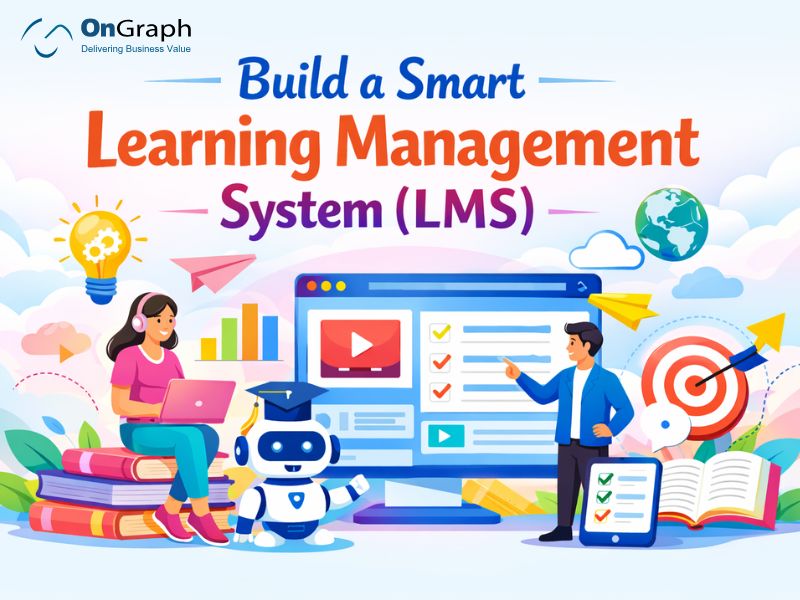
The digital education landscape has matured significantly. In 2026, online learning is no longer an alternative to traditional education — it has become the primary method for delivering training, certification, and skill development across industries. From universities to enterprises, organizations are now looking to Build a Smart Learning Management System that can deliver scalable, data-driven, and personalized learning experiences.
A modern LMS is no longer just a content delivery platform; it is a strategic tool designed to streamline training, track performance, and ensure measurable outcomes.
If you are planning LMS Development, launching an Online Learning Platform, or aiming to develop an eLearning platform like Udemy or Coursera, this complete guide will walk you through market insights, architecture decisions, must-have features, and monetization models.
2026 Market Outlook: Why LMS Demand Keeps Growing
The global digital learning ecosystem continues expanding.
- The global e-learning industry is projected to exceed $300 billion in 2026.
- The Learning Management Software market continues double-digit growth due to enterprise adoption.
- Over 85% of medium and large organizations use LMS platforms for workforce training.
- Corporate reskilling initiatives are accelerating due to AI, automation, and digital transformation.
- Mobile learning now accounts for a major portion of course consumption worldwide.
This consistent growth shows that investing in Custom E-Learning Solutions is not a short-term move — it is a long-term digital strategy.
What Is a Learning Management System (LMS)?
A Learning Management System (LMS) is structured E-Learning Software that allows organizations to create, manage, deliver, and track training programs digitally.
It enables organizations to:
- Create and organize courses
- Track learner progress
- Conduct assessments
- Generate reports
- Issue certificates
- Manage user roles and permissions
Unlike simple content hosting tools, modern LMS platforms provide data-driven insights that improve both learning outcomes and business performance.
Why Businesses Prefer a Dedicated Online Learning Platform?
1. Global Reach
An Online Course Platform removes geographical barriers. Learners can access courses anytime and from any device.
2. Cost Efficiency
Compared to traditional training, organizations reduce costs related to:
- Travel
- Printed materials
- Instructor scheduling
- Physical classrooms
3. Scalable Revenue Model
A well-designed Online Learning Platform allows:
- Subscription-based learning
- One-time course purchases
- Corporate licensing
- Certification-based monetization
4. Measurable Performance
Modern Learning Management Software includes built-in analytics to measure:
- Completion rates
- Engagement levels
- Assessment performance
- Skill progression
This data supports smarter business decisions.
Build Your Smart LMS with Experts Who Deliver Results
Essential Learning Management System (LMS) Features in 2026
If you are investing in LMS Development, these Learning Management System (LMS) Features are critical:
1. Role-Based User Management
Clear role separation ensures control and scalability:
- Learners (Mentees)
- Instructors (Mentors)
- Administrators
Each role must have a dedicated dashboard and access permissions.
2. Advanced Course Builder
Instructors should be able to:
- Upload videos, PDFs, and interactive content
- Create quizzes and assignments
- Reorder course modules
- Set completion rules
- Schedule live sessions
In our LMS deployments, flexible content management significantly improves course completion rates.
3. Assessments & Certification Engine
A professional LMS must include:
- Timed quizzes
- Automated grading
- Certification generation
- Pass/fail criteria
- Skill-based testing
This is essential if you want to develop an eLearning platform like Udemy or Coursera with certification credibility.
4. Live Classes & Webinar Integration
Modern learners expect:
- Live webinars
- Virtual classrooms
- Interactive Q&A
- Discussion boards
These features increase engagement and retention.
5. AI-Powered Chatbot & Virtual Assistance
Smart assistants improve learner experience by:
- Answering common queries
- Sending reminders
- Guiding through modules
- Reducing instructor workload
In practice, adding automated assistance reduces repetitive support queries significantly.
6. Reporting & Data Analytics
Administrators should access:
- User performance reports
- Course completion metrics
- Engagement statistics
- Revenue insights (for monetized platforms)
Strong analytics separate average E-Learning Software from professional-grade solutions.
7. Mobile-First Architecture
In 2026, your Online Learning Platform must work seamlessly on:
- Smartphones
- Tablets
- Desktop systems
Mobile-first design is no longer optional.
Turn Your LMS Idea into a Market-Ready Platform
Marketplace vs Private LMS: Strategic Difference
If you want to develop an eLearning platform like Udemy or Coursera, you must understand two models:
Marketplace Model
- Multiple instructors
- Revenue share
- Open enrollment
- Commission-based income
Private Branded LMS
- Single organization control
- Direct revenue
- Full branding
- Custom integrations
Choosing the right model impacts your technical architecture and monetization logic.
Cloud-Based vs Custom LMS Development
When planning LMS Development, you must choose between:
Cloud-Based LMS
Advantages:
- Faster deployment
- Lower initial cost
- Automatic updates
- Easier scalability
Best for quick launches.
Custom E-Learning Solutions
Advantages:
- Full feature control
- Scalable backend architecture
- Custom integrations (HR, CRM, ERP)
- Strong branding
- Flexible monetization
For businesses planning long-term growth, Custom E-Learning Solutions provide greater scalability and ownership.
Real-World LMS Development Challenges
From practical experience, common challenges include:
- Scaling video streaming under high traffic
- Managing user role complexity
- Ensuring secure certification issuance
- Integrating payment systems
- Maintaining data privacy compliance
Planning architecture correctly during LMS Development prevents costly restructuring later.
Choosing the Right Tech Stack for LMS Development
A scalable LMS requires:
Backend:
- Laravel / Python / Ruby
Database:
- MySQL / MongoDB
Frontend:
- ReactJS / Angular
Cloud:
- AWS / Azure / Google Cloud
Video Delivery:
- CDN integration for global performance
A carefully selected stack ensures performance, security, and long-term scalability.
Step-by-Step Process to Build a Smart LMS
- Define target audience (education, corporate, marketplace)
- Identify core Learning Management System (LMS) Features
- Choose between cloud or custom build
- Design intuitive UI/UX
- Develop core modules
- Integrate assessments and reporting
- Implement payment gateway (if monetized)
- Test performance and security
- Launch and optimize based on analytics
Why Invest in Custom E-Learning Solutions in 2026?
If your goal is to:
- Launch an Online Course Platform
- Build enterprise training software
- Develop an eLearning platform like Udemy or Coursera
- Offer scalable digital certification programs
Then investing in professional Learning Management Software ensures:
- Better scalability
- Higher data control
- Strong monetization flexibility
- Long-term digital asset ownership
Launch a Future-Ready Learning Management System
Create an AI-powered, mobile-friendly LMS platform built for enterprises, universities, and fast-growing edtech startups.
Bottom Line
A modern Learning Management System (LMS) is not just E-Learning Software — it is a business growth engine.
In 2026, success depends on:
- Smart architecture
- Advanced Learning Management System (LMS) Features
- Mobile accessibility
- Scalable infrastructure
- Strong analytics
- Monetization readiness
Whether you are building a new Online Learning Platform or upgrading existing systems, the right LMS Development strategy determines long-term success.
The future of education is digital — and now is the time to build it the right way.
FAQs
To build a smart Learning Management System means creating a scalable, data-driven platform that goes beyond basic course hosting. A modern LMS includes analytics, mobile compatibility, automation, role-based access, certification tools, and personalized learning paths.
A smart LMS improves engagement, tracks learner progress in real time, and integrates with tools like HR systems, CRM platforms, and payment gateways. It is designed not just for content delivery but for measurable learning outcomes and business growth.
The cost depends on the scope, features, and deployment model.
A basic cloud-based LMS can cost significantly less than a fully custom enterprise solution. However, custom LMS development includes:
- Role-based dashboards
- Reporting and analytics
- Mobile apps
- Payment integration
- Certification engines
- Third-party integrations
The long-term cost also includes hosting, maintenance, and scaling infrastructure. Businesses planning large-scale platforms often choose Custom E-Learning Solutions for better scalability and ownership.
A competitive LMS in 2026 should include:
- User role management (Learners, Instructors, Admins)
- Course creation and content management
- Assessments and certification
- Live webinar integration
- Mobile-friendly interface
- Reporting and analytics dashboard
- Gamification and engagement tools
- Secure payment system (if monetized)
These features ensure scalability, engagement, and long-term usability.
An Online Course Platform typically focuses on selling and delivering courses to learners. It may include payment gateways and marketing tools.
A Learning Management System (LMS), on the other hand, is more structured and enterprise-focused. It includes:
- Reporting tools
- Compliance tracking
- Role-based access
- Certification management
- Integration capabilities
If your goal is to develop an eLearning platform like Udemy or Coursera, you need both marketplace features and LMS-level management tools.
It depends on your goals.
Cloud-Based LMS:
- Faster launch
- Lower upfront cost
- Easy updates
Custom LMS Development:
- Full control over features
- Custom integrations
- Strong branding
- Long-term scalability
Businesses aiming to build a strong digital asset usually invest in custom Learning Management Software for better flexibility.
Development time varies based on complexity.
- Basic MVP LMS: 2–4 months
- Advanced custom LMS with integrations: 4–8 months
- Marketplace model like Udemy: 6–12 months
Proper planning, clear feature prioritization, and scalable architecture significantly reduce delays.
To develop an eLearning platform like Udemy or Coursera, you need:
- Multi-instructor support
- Revenue-sharing system
- Secure payment integration
- Course rating & review system
- Certification engine
- Advanced analytics
- Scalable cloud infrastructure
The key difference between a simple LMS and a marketplace model is the monetization structure and user management complexity.
About the Author

Let’s Create Something Great Together!
Latest Blog



Let’s have a conversation today!


India
ONGRAPH TECHNOLOGIES PRIVATE LIMITED,
SDF L-1, NSEZ,
Sector 81, Block L, Phase-2,
Noida, Uttar Pradesh-201305

USA
OnGraph Technologies,
120 Bethpage Rd, Suite 304,
Hicksville, NY 11801, USA

Canada
7-1039 CEDARGLEN GATE,
Mississauga, Ontario,
Canada L5C 3A7

UK
89 Banstead Road South,
Sutton, Surrey, SM2 5LH
United Kingdom

Malaysia
G-3A, Amaya Maluri, Jalan
Jejaka 2, Taman Maluri,
KL–55100, Malaysia

Singapore
10 Anson Road,#26-04
International Plaza,
Singapore (079903)